
Aggrieved Hope Residents and Creekbend Reach Agreement on New Rules for Music Venue
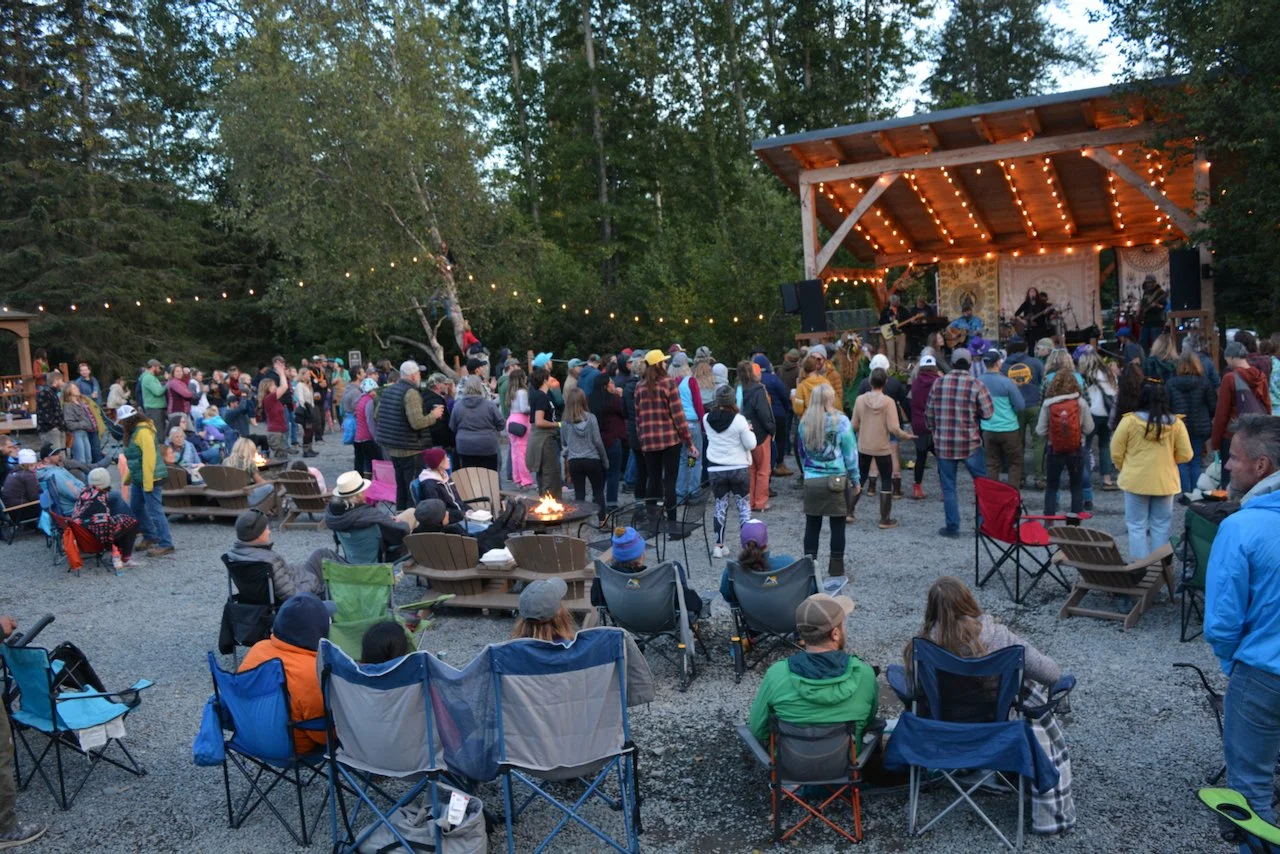
The band Hope Social Club performs at the Creekbend in Hope. (Photo by Soren Wuerth)
By Soren Wuerth
TNews Editor
Under the purview of a retired superior court judge, a group of residents in the tiny, end-of-the-road town of Hope have reached a deal with operators of a popular music park.
A memorandum of understanding, struck between Creekbend Company and Friends of Hope, was forged March 20 and cleared the state Alcohol Control Board this week. It sets allowable noise levels, limits attendance, and regulates parking at the venue, among other conditions.
"Overall, I'm feeling very good about it," said Liam Bureau, vice president of Friends of Hope. "It feels very fair to me. In the true definition and spirit of compromise, both parties conceded significant things. And that's what allowed us to meet in the middle."
Conflict between some property owners and Creekbend has been brewing since the company began to expand its event grounds, add music acts and amplify sound. They complained about cars blocking driveways, public inebriation and unauthorized camping in a community that lacks a local police force and relies on a volunteer fire brigade.
"Based on what had happened so far—really the last almost decade leading up to this—this will be certainly the largest conversation that's happened around this topic within the community, and also this will lead to the most concrete changes of anything so far," Bureau said.
Messages sent to Creekbend were not returned in time for publication.
From now on, according to the MOU, no more than 700 people can attend an event at Creekbend and it must designate at least three "amplified-music-free" weekends between May and September in the coming year.
Sound levels at the company's property cannot exceed 65 decibels between 7 a.m. and 11 p.m. and the MOU limits noise to 50 decibels outside those hours.
Bureau said these are the same restrictions required in residential areas in Anchorage and restrictions on sound represent, for his group, "the most significant achievement" in the agreement.
"I got involved out of being sort of in between the perspectives," Bureau said. "Even in a town this size, there are groups and silos, and I hang out with people in each. I could see there was a lot of overlap in what folks were talking about. Whereas within their silos, that's obviously not as visible."
The MOU, which will be in place for a three year trial period, was passed by the state's ABC board at its meeting Tuesday in Nome.

An aerial photo of Hope, Alaska.