
David Attenborough’s ‘Ocean’ comes to the shore of Turnagain Arm
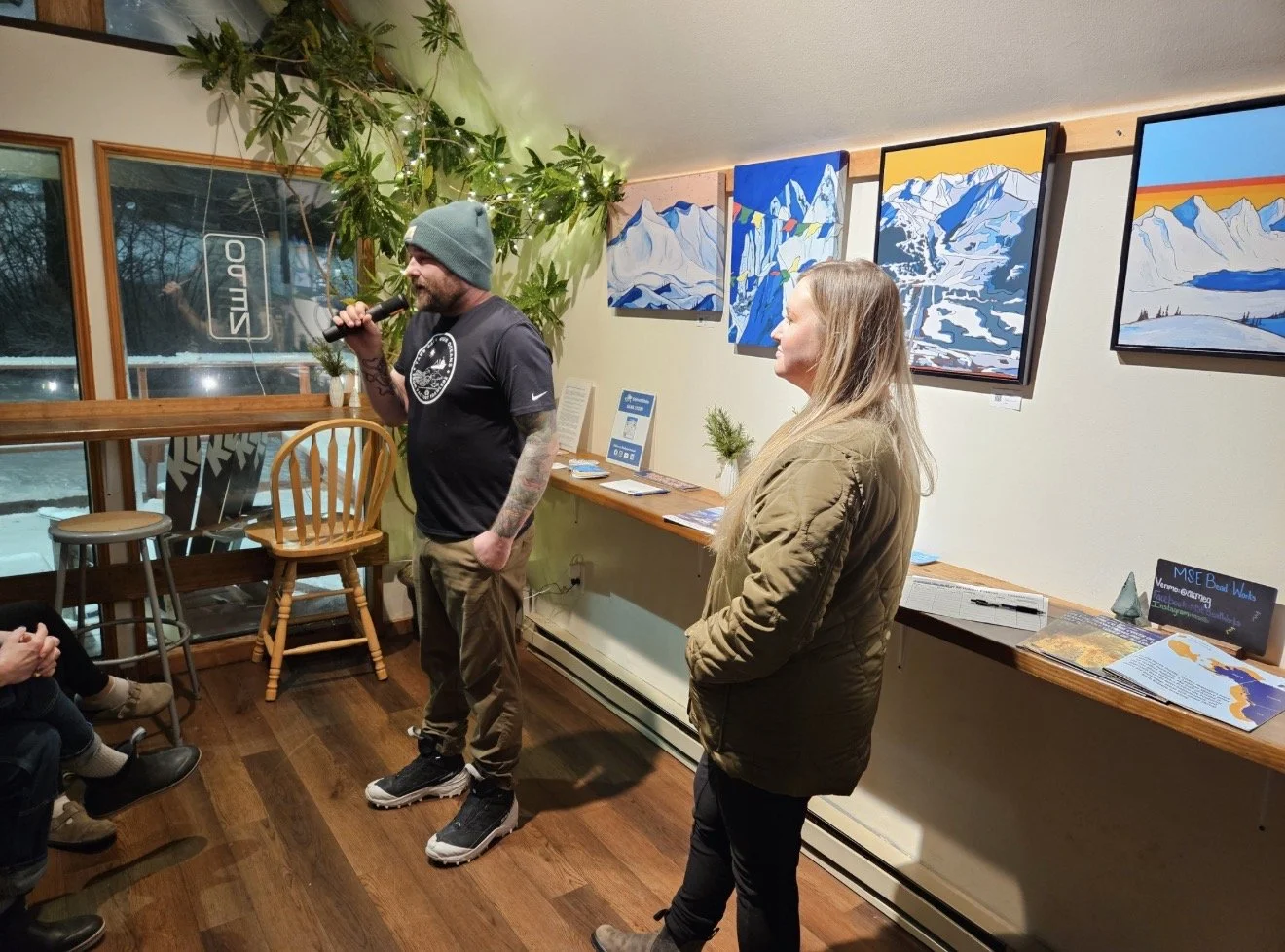
Alpenglow Coffeehouse hosted Dec. 16 a showing of the movie “Ocean with David Attenborough” for a full house of Girdwood residents. (Photo by Chase Berenson)
By Chase Berenson
TNews Staffwriter
On Tuesday, December 16th, Alpenglow Coffeehouse hosted a showing of the movie “Ocean with David Attenborough” for a full house of Girdwood residents. The film is a documentary that showcases the importance of the world’s oceans and documents some of the environmental threats they face in today’s world. The movie showing was in collaboration with the organizations SalmonState and Oceana, who have hosted several showings and presentations in the past few weeks around Alaska.
Due to the size constraints of Alpenglow’s main room, the showing was limited to 30 people who signed up for free tickets in advance. The movie was preceded by a brief introduction by Ryan Astalos of SalmonSate, Lauren Hynes of Oceana, and Justin Shoffner of Alpenglow, and then the movie showing began.
The film is narrated by David Attenborough, the 99-year-old British natural historian, biologist, and broadcaster who is known for his nature documentaries. Attenborough tells of his love of the ocean, and the film showcases the raw beauty of seas from all over the world. Viewers are shown scallop beds in the United Kingdom, fishing grounds in Liberia, reefs in Australia, penguins in Antarctica, and more around the world. The footage is incredible, including the world’s smallest plankton all the way up to blue whales, the largest animal on the planet. However, the movie takes a turn as it starts showcasing environmental threats to the ocean, especially the method of fishing known as bottom-trawling.
During a presentation after the movie Astalos and Hynes discussed the fact that while the film didn’t go into detail about Alaskan waters in particular, Alaska’s waters do have trawling fleets that are causing the same damage to seabeds and marine animals in the Bering Sea and the Gulf of Alaska. As bottom trawlers drag their nets and gear along the bottom of the ocean, they are damaging corals and animals on the ocean floor while collecting far more species than the specific one they are fishing for. In the fishing industry, this is known as “bycatch,” or the species that are caught by vessels while trying to catch a specific species. For example, there are trawlers in the Bering Sea who are fishing for pollock but may accidentally catch salmon as bycatch.
There was a Q&A session at the end of the evening, and the audience brought up many great questions to Astalos and Hynes. Some of the topics included information about bycatch, different regulatory frameworks in state/federal waters, the differences between bottom trawling/pelagic trawling, and the impact to the state economy if more areas are protected from trawlers. Astalos from SalmonState was mostly the reference person for bycatch questions while Hynes from Oceana mostly responded to seabed, corals, and environmental damage to the nets themselves.
The movie ended on a note of hope, as Attenborough shows viewers that the ocean as proved it can restore itself once it is protected from human impacts like overfishing. Justin Shoffner of Alpenglow followed the hopeful trend as he told the audience that these topics are very important to him and he was happy to host the showing and grow awareness in Girdwood.