Forest-Bog Walk & Talk Daylights Wonder
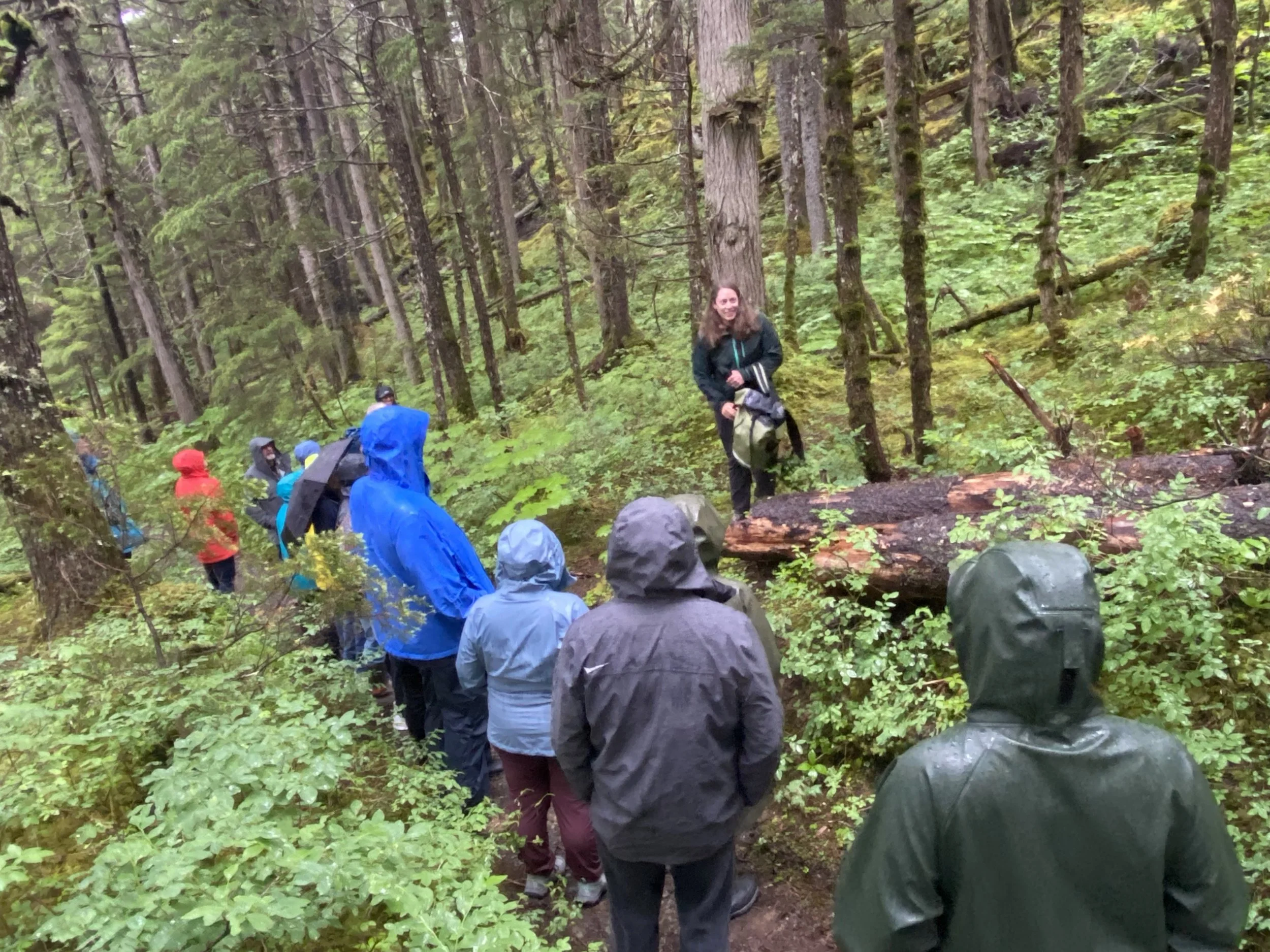
Kate Mohatt talks trees on the Iditarod Trail Wednesday night as part of Four Valleys Summer Speaker Series. (Photo by Turnopticon)
By Soren Wuerth
TNews Editor
For most people, let's admit it, a walk through our local meadow reveals beauty writ large—the way light suffuses the field, yellow-green, distant blue-gray ridgelines, or the warped netted planks replacing a muddy track.
Rarely do we crouch for a closer look, except to search for a blueberry patch.
Yet, slowing down to allow curiosity to accelerate, maybe to take time to consult a guidebook or, alas, your phone's "iNaturalist" app, is where things in that bog get really crazy.
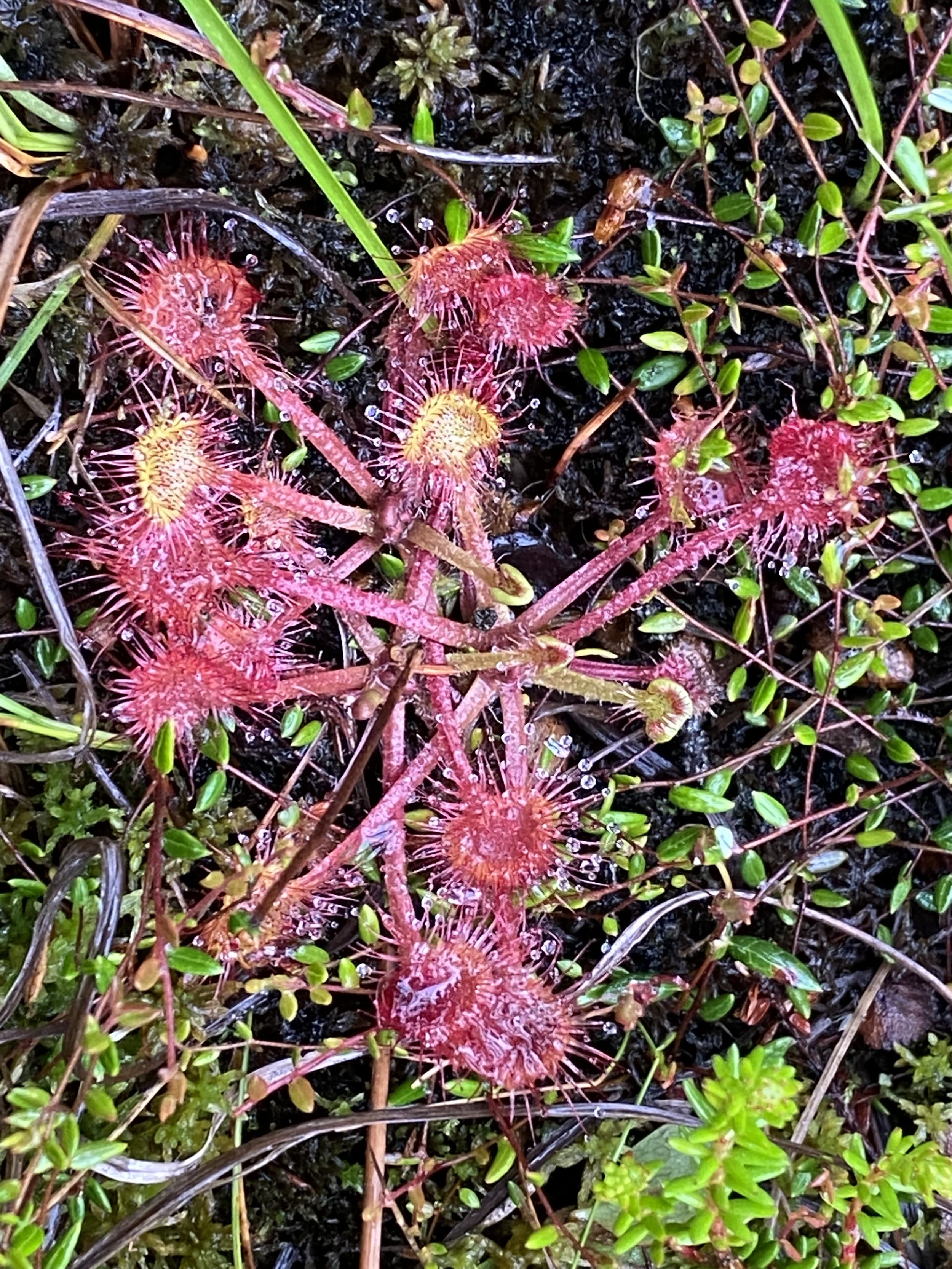
The carnivorious plant, Round Leaf Sundew. (Photo by Turnopticon)
In just a little more than an hour, local botanist and author Kate Mohatt introduced a group of around 15 to a range of remarkable forest and peatland plants in Girdwood's backyard.
The Wednesday evening walk, one of five events in Four Valleys' Girdwood Summer Speaker Series, showcased what we sometimes forget about the northernmost temperate coastal rainforest in North America—its unique biodiversity.
Standing on the spongy, mossy—and ancient—bog of "Anne's Meadow" on the upper Iditarod Trail, Mohatt touched a dwarf birch. She said the stubby tree helps indicate the valley's "weird" blend of boreal forest and rainforest.
When she heard about the unique quality of the plant, "I was like, this is ridiculous," Mohatt told the group. "This stuff is everywhere. And [her colleague] said, 'no, no, no—not everywhere.'"
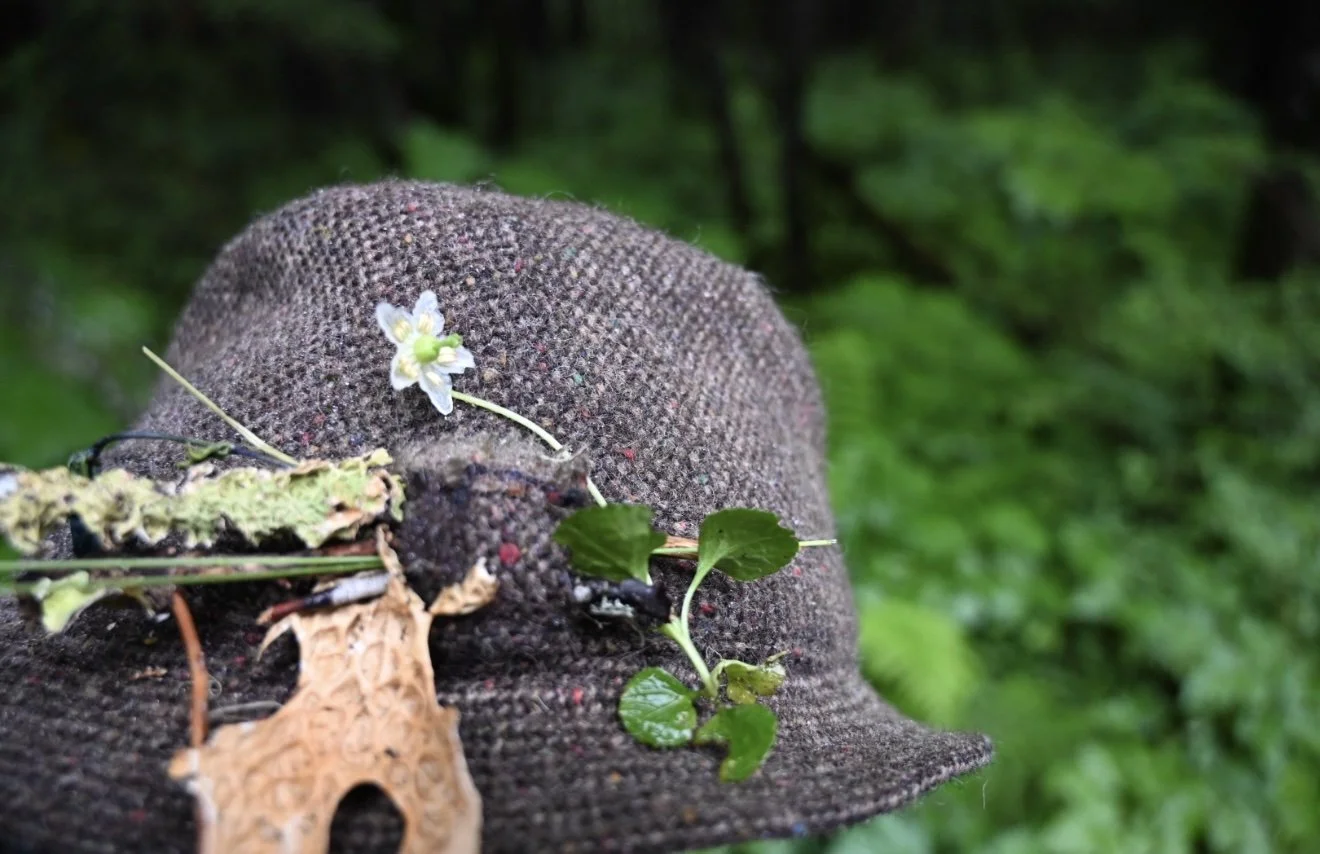
Thestar-shaped flower "Froggies Night Lamp" adornes Howard Earl's lichened cap. Earl's presentation for next Wednesday explores "Lichens of Girdwood Valley". (Photo by Soren Wuerth)
She next talked about cottongrass, now sad clumps of soaked gray flowers. She told the group that cottongrass is a common indicator of wetlands. She said wetlands aren't always level, but occur on slopes like the hillside near Alyeska's Chair Seven, which, too, is speckled with cottongrass.
Mohatt listed more wetlands-associated species—including bogberry, crowberry, different sedges—and gave both their common as well as scientific names. She pointed to a small, crimson flower at the edge of the boardwalk.
The reddish, spiky plant resembling a freeze-framed firework is roundleaf sundew, one of the only carnivorous plants in Alaska. Who knew?
The group moved under the forest canopy where some of the trees, with trunks not especially large in diameter, are nevertheless old, Mohatt said. She said by counting tree rings, she and a colleague found some 600 to 700 hundred years old.
Just off the trail, she stopped to pluck a diminutive, star-shaped flower.
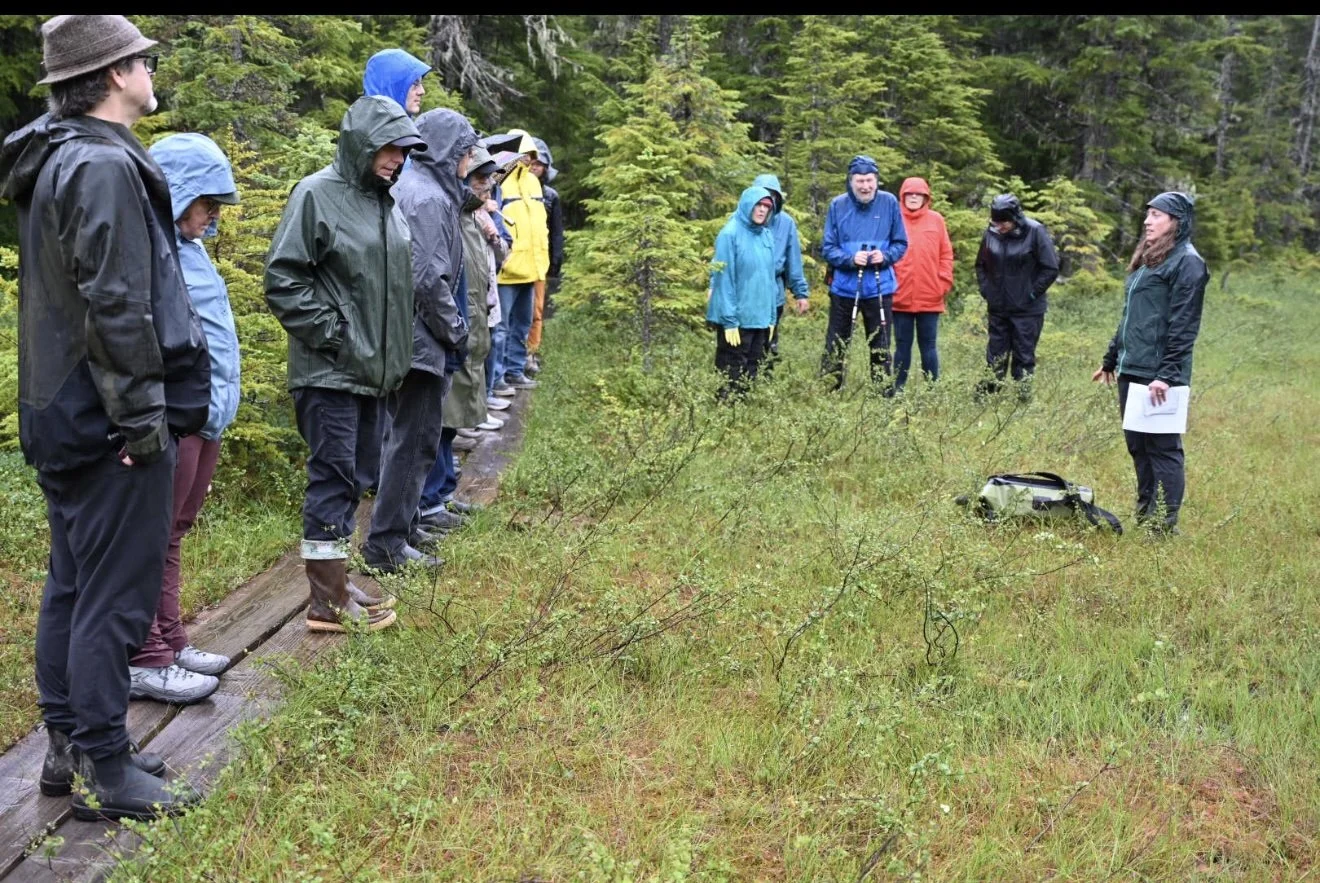
Kate Mohatt shares botanical surprises in "Anne's Meadow", a peatland bog along the upper Iditarod Trail. (Photo by Soren Wuerth)
"This one has a really cute name," Mohatt said. "Froggie's Night Lamp."
Offering a hand lens to magnify the mushroom's appearance, she asked what we saw. "Does it look like Candy Corn?"
There weren't many mushrooms around and, after Anne's Meadow, the forest felt wet, dark and cold.
"On a bright note," Mohatt said, "I predict a good year for boletes."
"Based on what?" one of the walkers asked.
“My gut," Mohatt replied.
"Look at the trees. If the trees are happy... the mushrooms are happy."
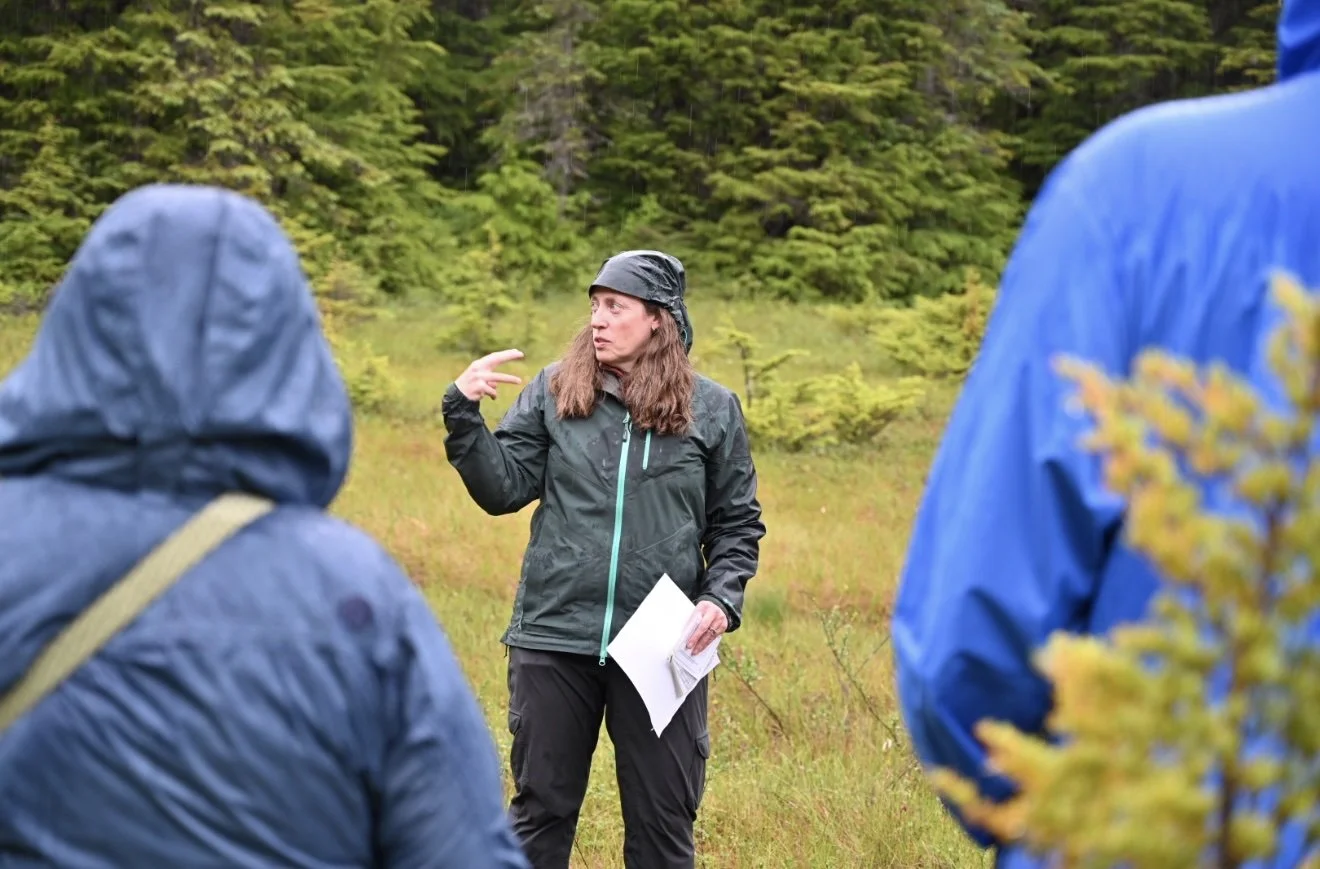
Kate Mohatt asks and answers questions during her outdoor presentation on a peatland bog. (Photo by Soren Wuerth)