
Improvements planned for Bird Creek Campground
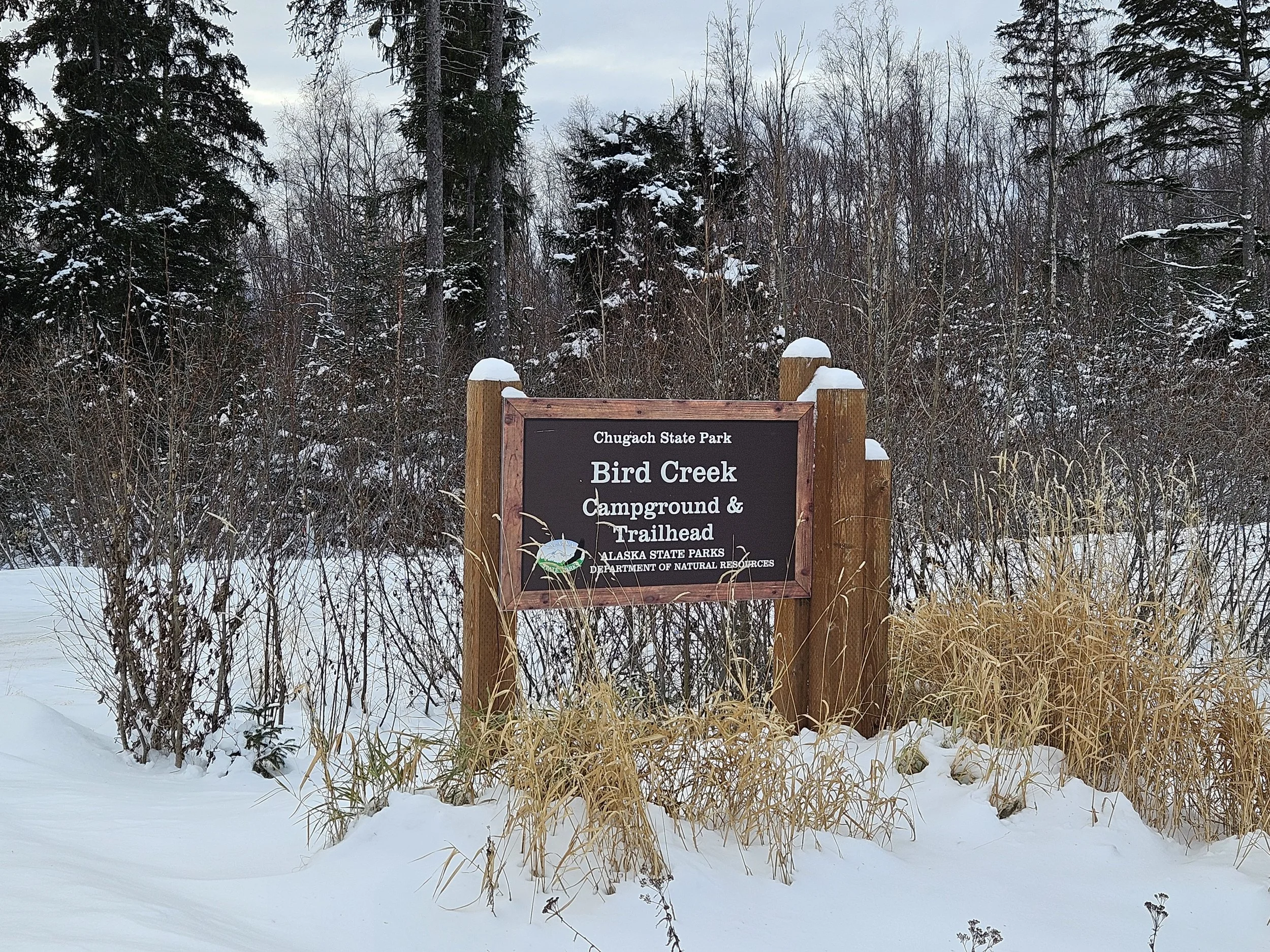
The Bird Creek Campground entrance sign as seen on January 9th, 2026, while the campground is closed for winter. (Photo by Chase Berenson)
By Chase Berenson
TNews Staffwriter
Chugach State Park is looking to invest in improvements to the Bird Creek Campground, the only campground located on the waterfront of the north shore of Turnagain Arm. Chugach State Park is one of the four largest state parks in the United States, and it stretches from the Anchorage Bowl on the west side deep into the Chugach Mountains on the east side. Much of the park’s southern border is the Turnagain Arm. The park has multiple campgrounds, including the Bird Creek Campground. Bird Creek Campground is known for its views of Turnagain Arm with its bore tides and beluga whales. It is primarily located on the south side of the Seward Highway, but it also includes an overflow camping area on the north side of the Highway.
The campground improvements project has two key focus points, one which will be more visible to campground users and one which will improve campground operations. Campers will see new signage throughout the campground which will update aging and outdating signage in the park. However, the larger project work will be happening in a less visible context.
Campground users are typically familiar with the concept of a campground host who helps operate and manage the campground. In Alaska State Park campgrounds, the campground host is a volunteer role for someone who will typically stay the entire summer season at the campground. At Bird Creek, the campground host’s job duties include tasks such as interacting with campers, ensuring campers are following campground rules, performing janitorial services, and performing minor maintenance such as grass mowing. Campground hosts are important volunteer roles to ensure that campgrounds are functioning correctly.
Chugach State Park has struggled in the past to fill Bird Creek Campground’s campground host role, and one cause is that there are no sites in the campground that feature the full combination of water, sewer, and power hook-ups for the volunteer’s RV. The campground host role is particularly important for Bird Creek Campground, due to its proximity to the population center of the Anchorage Bowl and the campground’s high usage on holiday weekends and at prime fishing times on Bird Creek. The current campground host location is in the campground’s overflow area on the north side of the highway because that is the only part of the campground with any utility service.
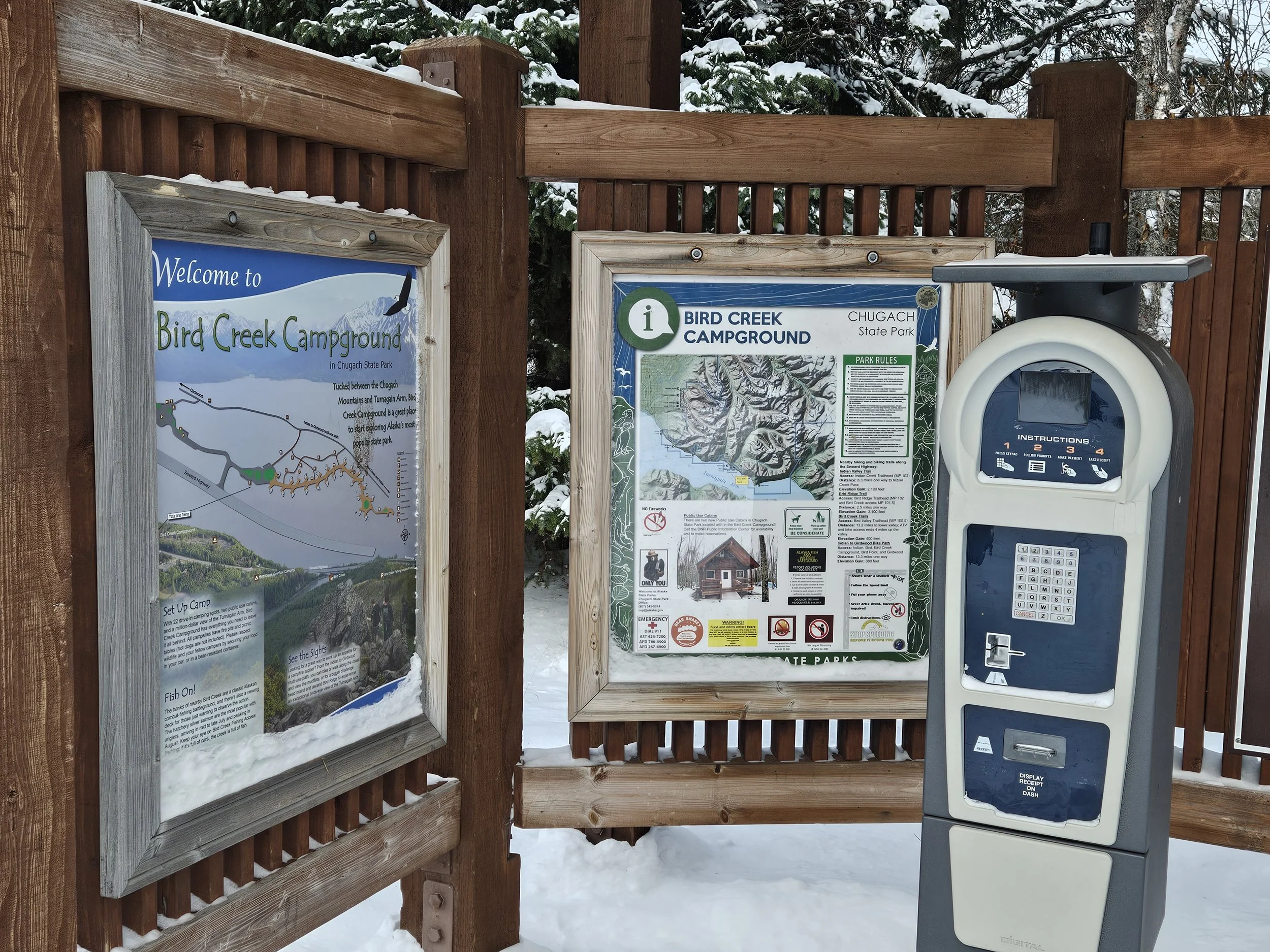
The Bird Creek Campground fee payment station as seen on January 9th, 2026, while the campground is closed for winter. (Photo by Chase Berenson)
To resolve that issue, this project will extend utilities for a campground host to the south side of the highway. The project will create a campground host site that has the trifecta of utilities for an RV and places the campground host in the primary campground user area. This utility project has been discussed for a long time, but there were infrastructure constraints limiting the feasibility of the project. In recent years the Alaska Department of Transportation has completed multiple Seward Highway projects that have resolved these constraints and allowed the project to move forward.
The State of Alaska will not be the sole funder of this project, as Alaska State Parks has applied for a Land and Water Conservation Fund (LWCF) grant from the National Park Service. These federal grants are managed by the federal government to support state and local parks throughout the country, and they are funded by earnings from offshore oil and gas leasing in federal waters. Rys Miranda is the Chief Engineer in Design and Construction for the Alaska Division of Natural Resources’ Division of Parks and Outdoor Recreation, and as part of his role he prepares and submits LWCF grant applications. Miranda explained that this LWCF grant funding is commonly used throughout the Alaska State Parks network such as at Kasilof River State Recreation Site in the Kenai, Chena Pump State Recreation Area in Fairbanks, and Byers Lake in the Mat-Su. The funding has also been used in Chugach State Park, including improvements at the Rabbit Valley trailhead, sanitation upgrades at McHugh Creek, and construction of a public use cabin Bird Creek Campground.
Miranda applied for the LWCF grant in October 2025, and he explained that this LWCF process is not competitive and there are no other applicants for the funding. He expects to hear in late summer 2026 whether the funding has been awarded.
If the proposal is successful and funding is secured, the project will move forward over the coming years. Design and permitting work would occur in 2027, with campground construction beginning in late 2028 or early 2029.