
Seven thousand pounds of marine debris removed from Whittier Harbor
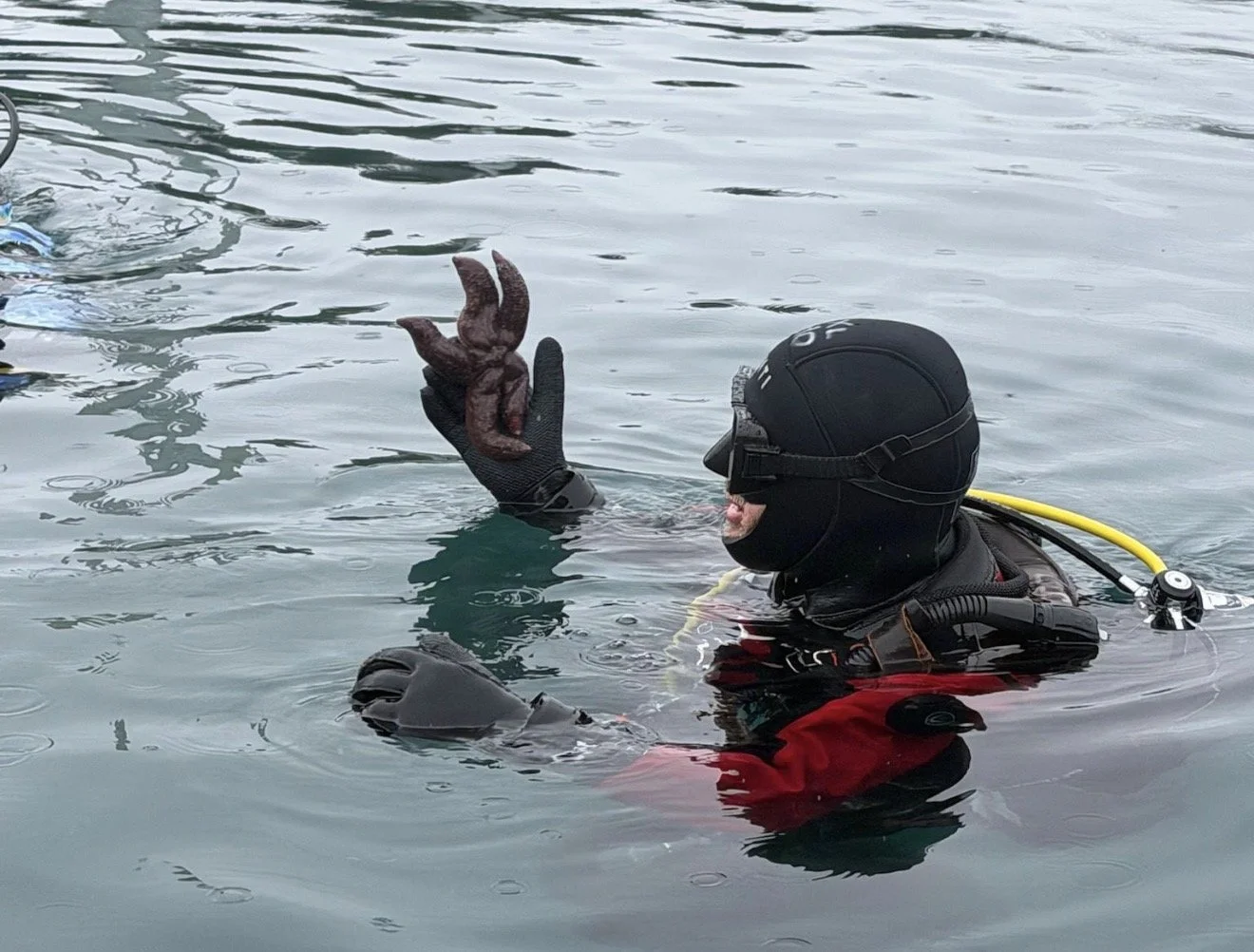
During a three-hour window, SCUBA divers and freedivers took to the water of Whittier Harbor to recover whatever they could find. Divers collected marine debris from the harbor floor and brought it up the boat ramp or the harbor docks, where volunteers above the water picked it up and hauled the waste to a sorting area near the boat ramp. (Photo by Chase Berenson)
By Chase Berenson
TNews. Staffwriter
Dive Alaska coordinated with multiple organizations to plan the 2026 Whittier Harbor Cleanup Day on Saturday, February 7th. This was the fourth annual event, and it brought out SCUBA divers and freedivers to scour the seabed of the Whittier Harbor and remove trash and marine debris.
This year was the largest event yet, with 158 volunteers participating. The weather was cooperative by Whittier standards, as the temperature was in upper 30s with rain. This was an improvement over previous years, where once the temperatures dropped below zero degrees and in another year the wind was whipping so strongly that it impeded cleanup efforts. At the event’s introduction, JD Stimson of Dive Alaska summed it by saying, “The wind isn’t blistering and the temperature isn’t frigid. If you did this before, you know this is a blessing.”
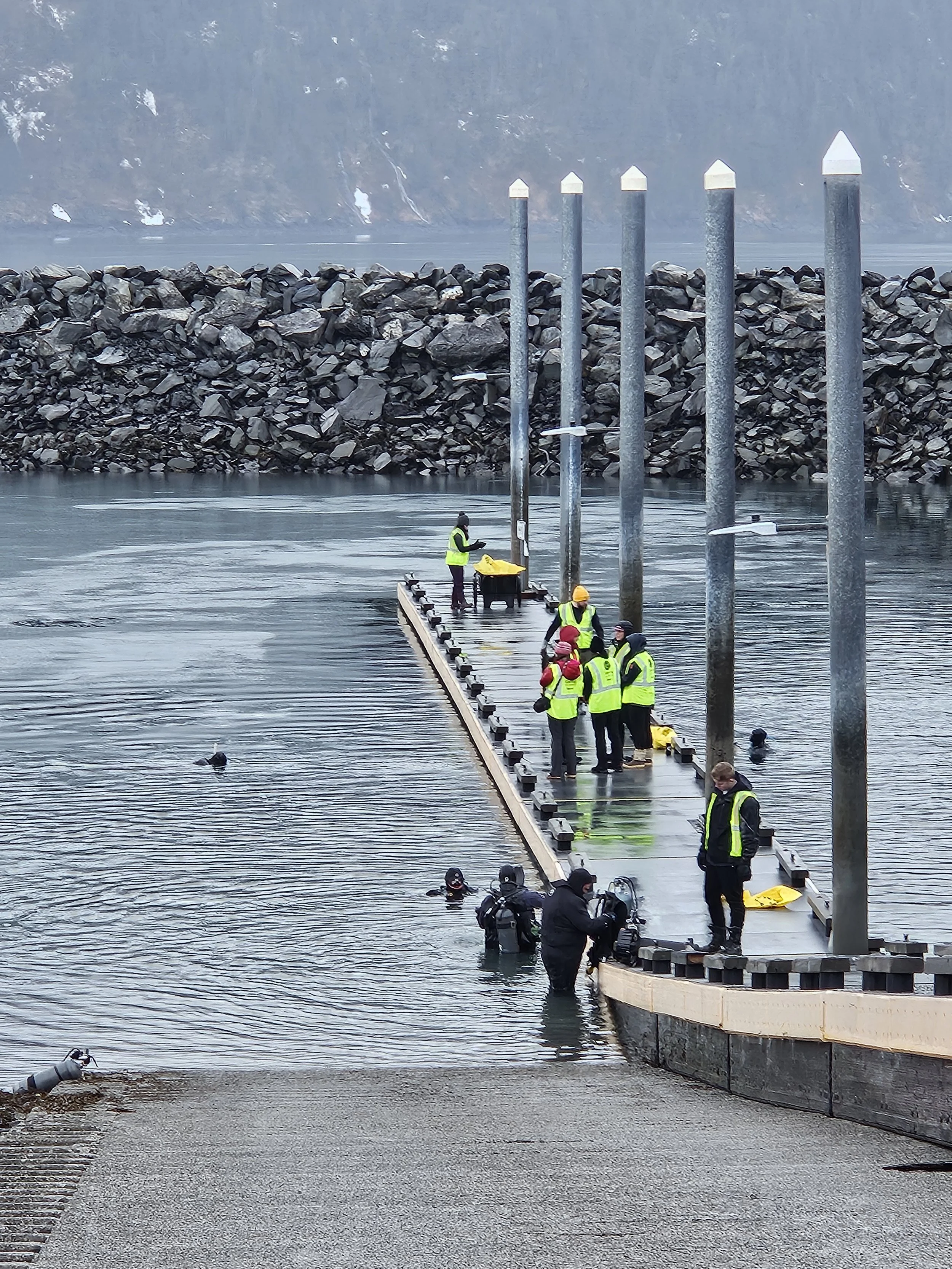
Dive Alaska coordinated with multiple organizations to plan the 2026 Whittier Harbor Cleanup Day on Saturday, Feb. 7. (Photo by Chase Berenson)
During a three-hour window, SCUBA divers and freedivers took to the water of Whittier Harbor to recover whatever they could find. Divers collected marine debris from the harbor floor and brought it up the boat ramp or the harbor docks, where volunteers above the water picked it up and hauled the waste to a sorting area near the boat ramp.
The divers were in good spirits and happy to help, despite diving in less-than-ideal conditions. The cold water temperature was the most obvious concern, but divers also reported low visibility underwater. Girdwood resident and SCUBA diver Ben Napolitano reported visibility down to two-to-three feet underwater. As divers were picking up debris from the muddy seafloor, silt was spread into the water which led to the poor visibility. But that didn’t stop divers from collecting a large amount of trash.
The Prince William Sound Stewardship Foundation (PWSSF) organized the marine debris sorting area and collected data on the trash. PWSSF regularly conducts marine debris cleanups throughout Prince William Sound, and the data collected is valuable to tracking the scourge of marine trash. The data collected includes the amount of waste, the different categories of waste (such as fishing debris, single-use plastics, etc.), and the source of waste (such as whether it was likely to come from a local community or whether ocean currents brought it here from Asia).
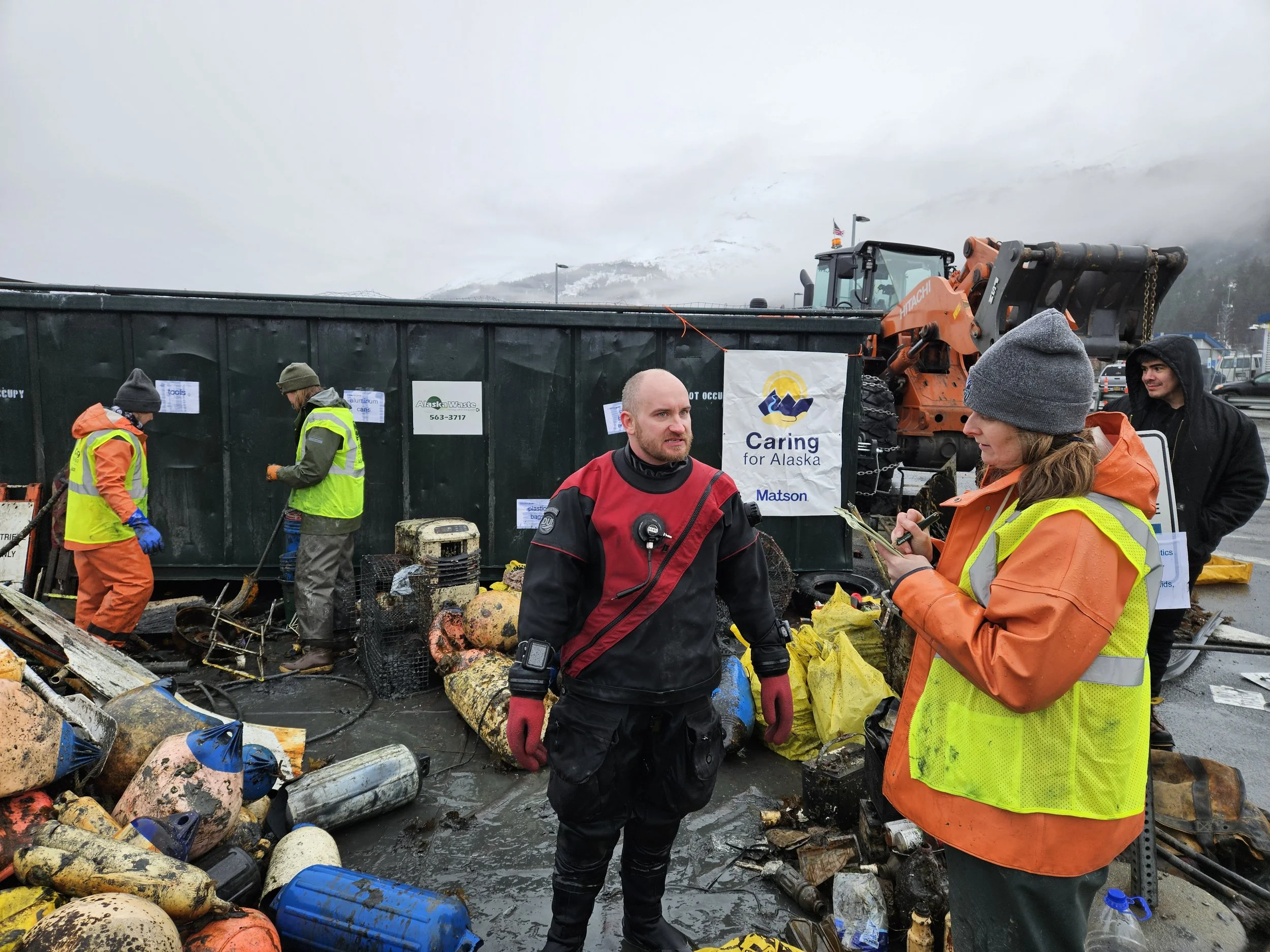
The Prince William Sound Stewardship Foundation (PWSSF) organized the marine debris sorting area and collected data on the trash. (Photo by Chase Berenson)
Some of the highlights from the harbor floor included enough cell phones to fill a bucket and 43 pairs of sunglasses. Single-use plastics and fishing debris were large categories. There were many glass bottles, though unlike previous years no one found any liquor or wine bottles that were full and still sealed. Dive Alaska held a contest for the most interesting finds of the day, which included a depth gauge, a large dehumidifier, a shrimp pot with an interesting story, a skateboard, and a hunting blind for mountain goats.
The shrimp pot’s story is a circular tale. Last summer a bear was in Whittier Harbor and climbed into/onto multiple boats searching for food. One of the boats that suffered from the bear’s rampage had lost a shrimp pot as the bear pushed or threwit off the boat’s deck. A diver had brought a shrimp pot back to the surface, and it was recovered by the boat’s owner who recognized it.
As the waste was sorted, it was discovered that some of the waste had incidentally brought up sea creatures with it. Volunteers were often seen walking back down the boat ramp to return urchins, starfish, and other animals back to the water so they could continue to live happily in a cleaner environment.
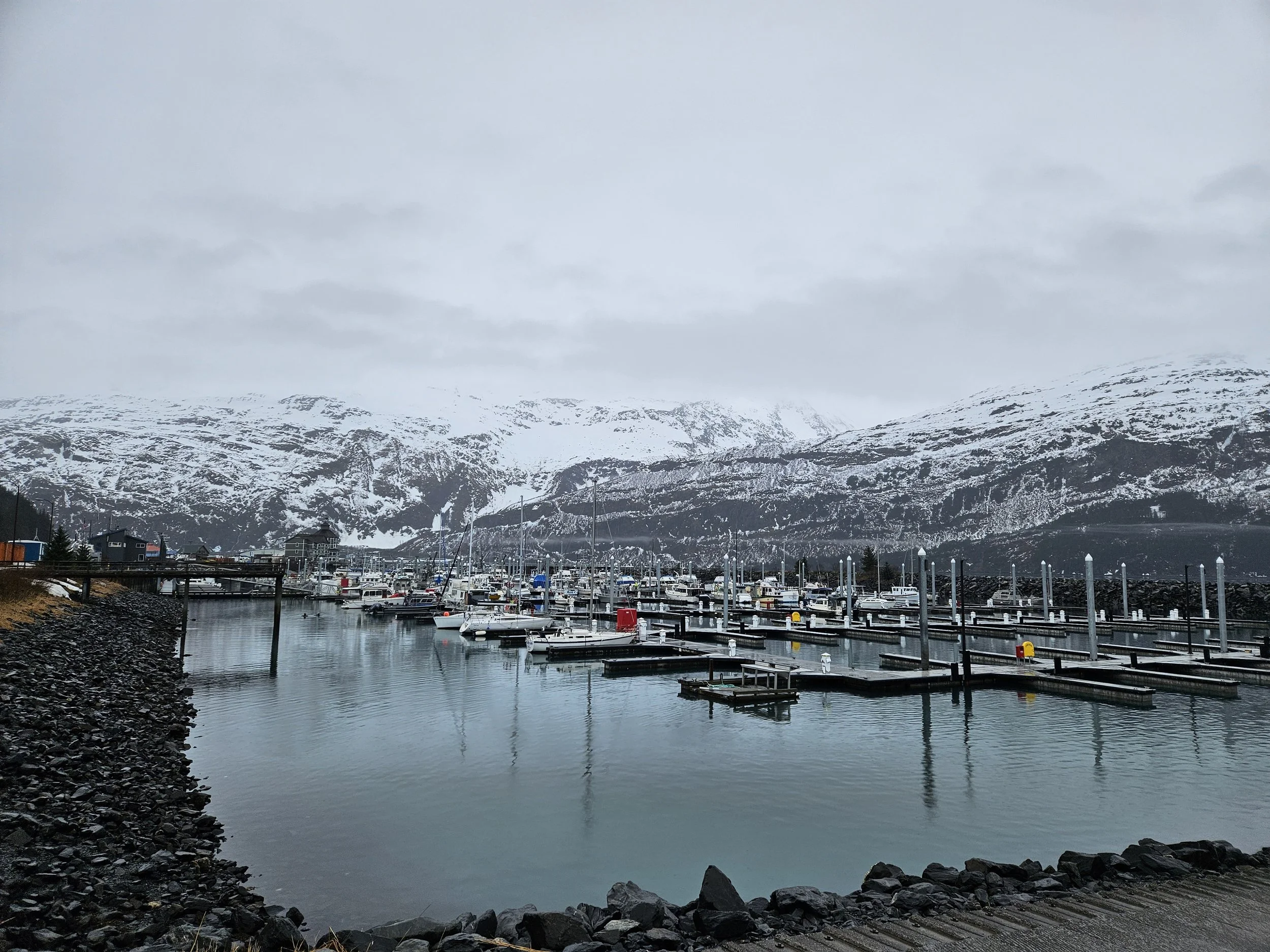
Whittier Harbor in Whittier, Alaska. (Photo by Chase Berenson)
Once the data was collected, the trash went into a dumpster provided by Alaska Waste for the event. Alaska Waste weighed the dumpster, and 2026 set the record for most waste collected at 6,900 pounds. That will be hard to beat in future years, as this total included an outboard motor that was recovered as well as a 1,200-pound pylon that was recovered from the harbor floor.
This effort brought together partners from across the state and the community of Whittier. The Alaska Marine Highway System opened the ferry terminal to allow people to warm upand use the restrooms. Whittier Fire Department and the Alaska Dive Search Rescue & Recovery Team were both on hand in case of emergency. The Alaska Department of Transportation waived the tunnel fee for volunteers, and it was noted that the first time the DOT had ever waived tunnel fees was for a previous year’s Cleanup event. The Whittier Harbormaster closed the Harbor to boat traffic to allow for safe diving, and Alaska Pacific University brought out a team of divers. Among all the volunteers and participating groups, Dive Alaska’s Stimson said he spent time during the event walking around keeping an eye on things and he was proud that, “everyone was putting in the work.”