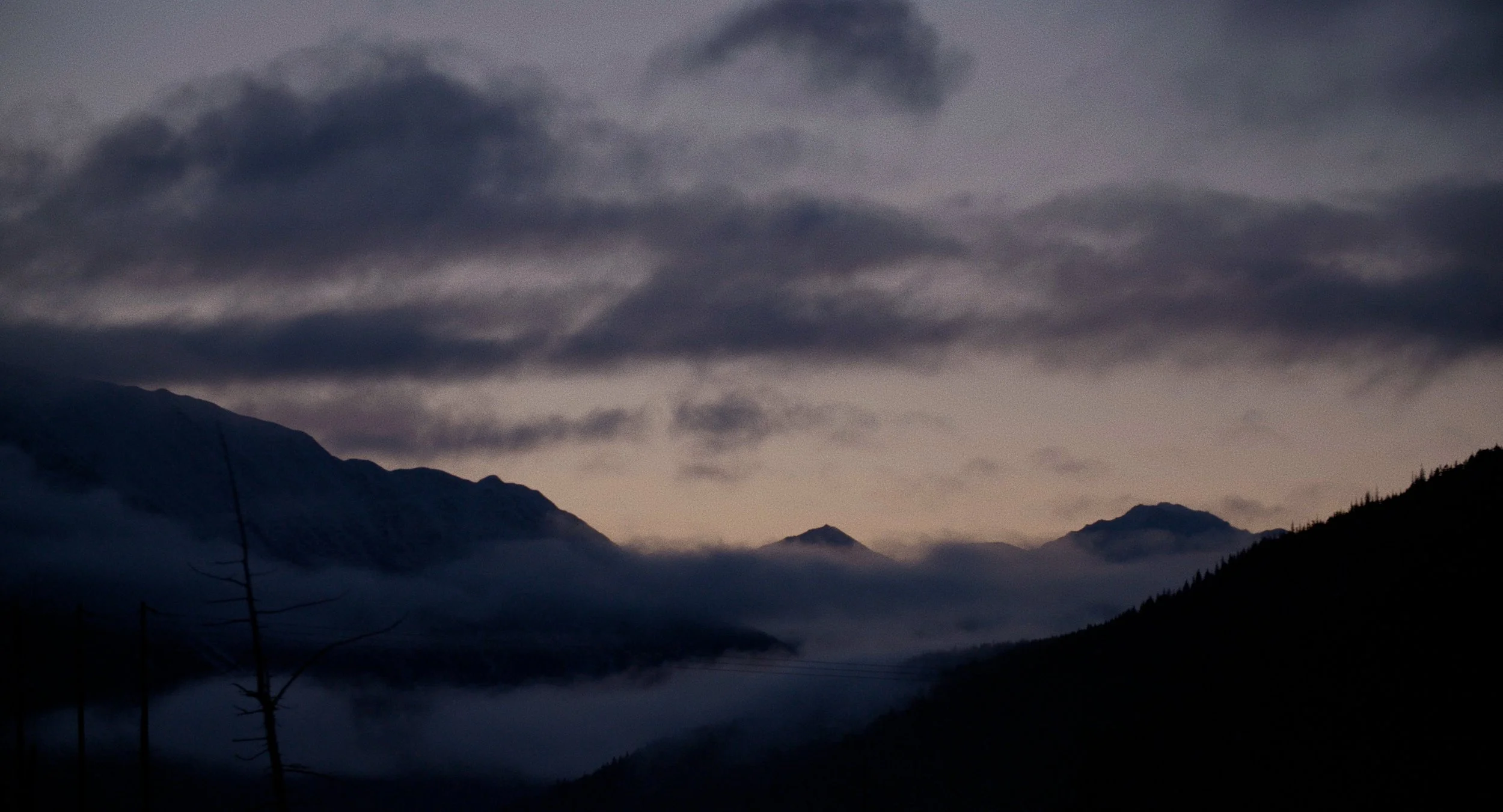
November landscape in Whittier. (Photo courtesy of PogieJoe Productions)
By Allison Sayer
TNews Staffwriter
There’s a well-worn truth about Alaska: You come for the landscape, but you stay for the people. That’s certainly true of Prettier in Whittier, a new short film screening at the Anchorage Film Festival on December 14.
The first voices we hear are crows, also portrayed later in dreamy animation by Jessica Hiemstra. The first human voice is Anchor Inn bartender Beverly Sue Walts, saying “I love Whittier.” She addresses the other saying about Whittier right away (rhymes with “prettier”), and passionately relates why she is not having it. Through interviews, we learn more about Walts’ life story and the peace she finds in the town.
We also meet Mili Suli, shopkeeper and minister. Both the grocery store Suli runs and the church she preaches in are located inside Begich Towers. “Without love, you ain’t nothing,” she says, “and I know this is the reason why I have this store.” Amid the merchandise, she describes letting people “pay later” for things they need if they don’t have the money right away.
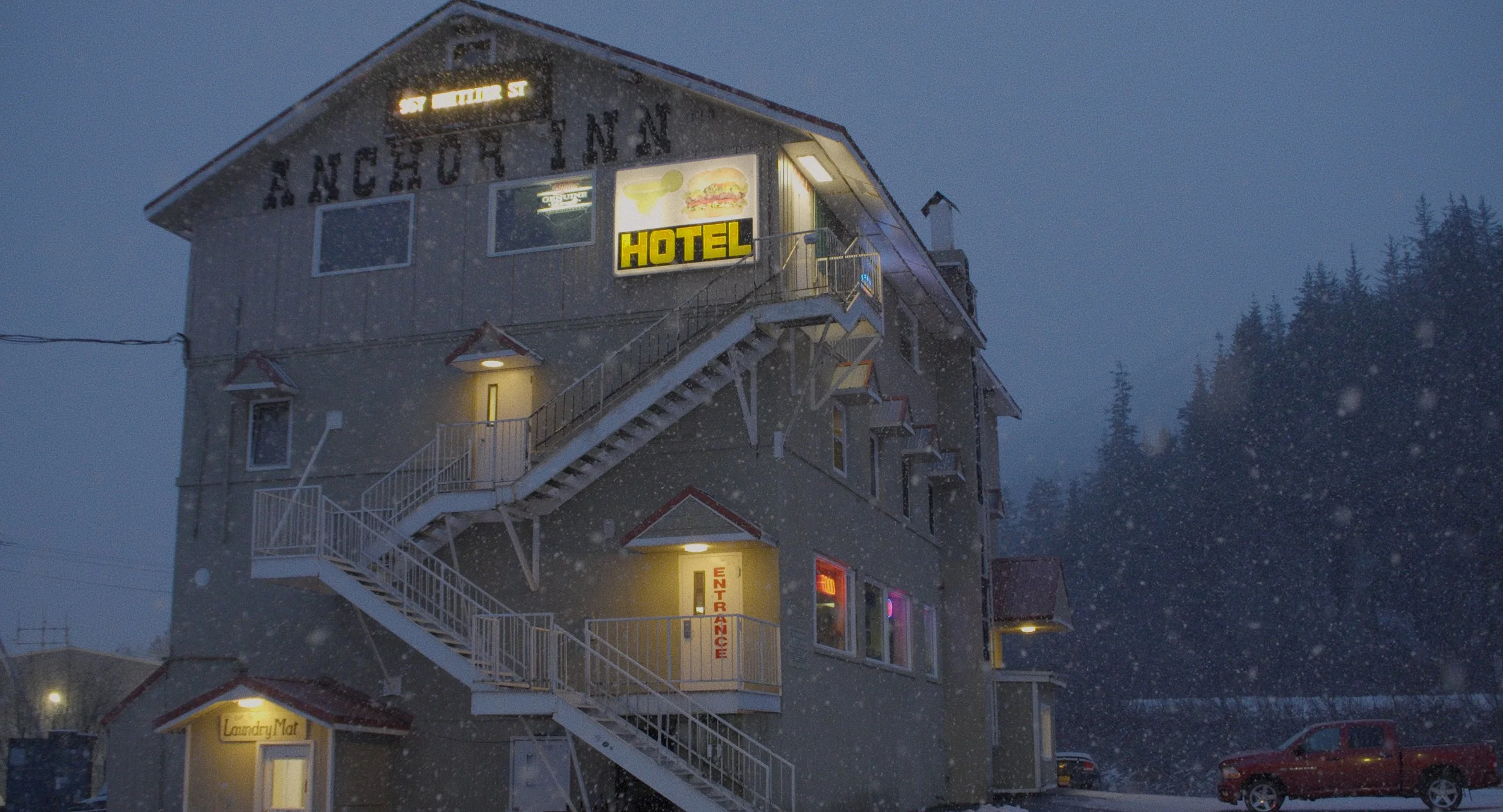
Snow falling outside the Anchor Inn. (Photo courtesy of PogieJoe Productions)
Kowalski is invited to film during a church service, an aspect of Whittier life rarely seen by outsiders. The spiritual power of the service comes through with warmth and respect.
Mayor Dave Dickason relates Whittier’s Cold War history against a backdrop of photos and documents from the museum. Both Mayor Dickason and Deputy Harbormaster Kyle Loan discuss how the social structure is shaped by the close quarters of Begich Towers. I was impressed that this important context is delivered without “Gee whiz, they all live in the same building!” vibes.
How did a team from Ohio with just a few days to shoot create something that felt personal? Chatting with creator Joe Kowalski, I learned he didn’t come for the landscape to begin with.
Kowalski’s interest in Whittier was originally part of a larger project: a feature-length film that explores micronations all over the world. He hoped Whittier’s unusual blend of isolation and concentration could offer insights. Could this town help explore “how we form communities in the 21st century?”
Ultimately, the Whittier story didn’t quite fit into Micronations. Yet he found the people and place so compelling, he decided to create a standalone short film from his footage.
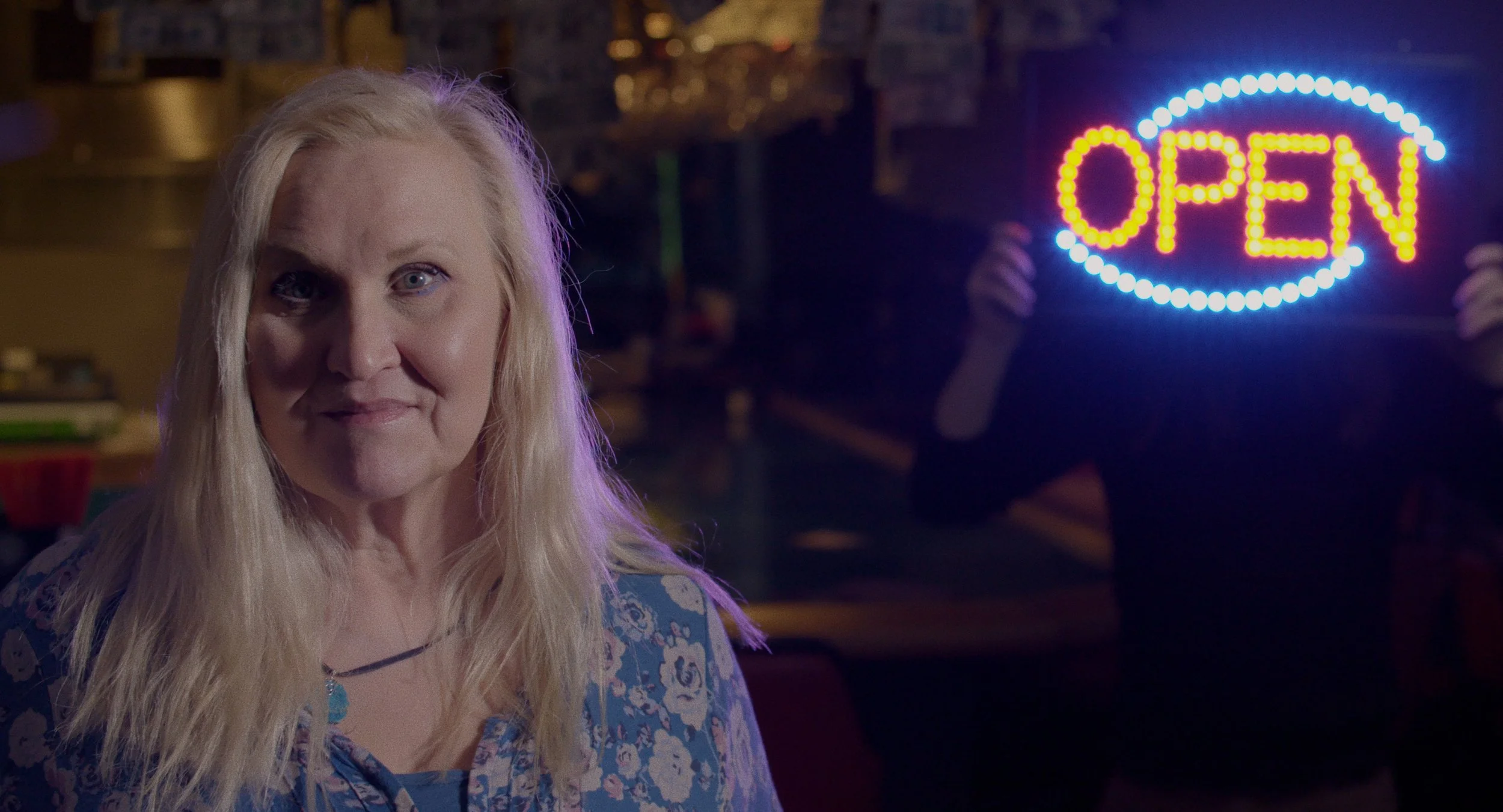
Anchor Inn bartender Beverly Sue Walls. (Photo courtesy of PogieJoe Productions)
Kowalski’s team chose November to visit, when the pace of life is slower and seasonal businesses are closed. He said he arrived with an understanding that “maybe not everyone wants to be connected with the outside world,” an expectation he would have to earn people’s trust and show he was “well-intentioned.” The crew got to know Walts playing darts and singing karaoke.
Walts recommended Kowalski introduce himself to Suli, calling her “the matriarch of the Samoan community.” Kowalski recalled Suli was nervous to be on camera initially, and wasn’t sure what to say. They spent some time chatting in the shop, clearly a comfortable space for her. Customers and visitors came and went as the conversation continued. From time to time, when Suli related something, Kowalski would say, “What you just said would be really great on camera.” Eventually, they turned the cameras on.
As much as the film is human-centered, the natural environment is an essential character in Alaskans’ lives. Scenes of the beautiful surrounding area, which feel more intimate due to November low-light conditions, rain, and snow, are intercut with interview footage.
Prettier in Whittier debuted in Kowalski's home state. It won best documentary at the Short. Sweet. Film Fest in Ohio and was shown at the Cinema Columbus Film Festival. It has traveled to the American Documentary and Animation Film Festival in Palm Springs and the Aesthetica Film Festival in England.
For Outside audiences, “sharing the story of Begich Towers and Whittier with other parts of the world” is part of the experience. Kowalski hopes Alaskan viewers will come away with a distinct sense of “time and place.” In his body of work, he hopes audiences will explore what unique communities can teach us about “ways of belonging, ways of including everybody that we can all learn from.”
Kowalski invites conversation through his email: pogiechannel@gmail.com
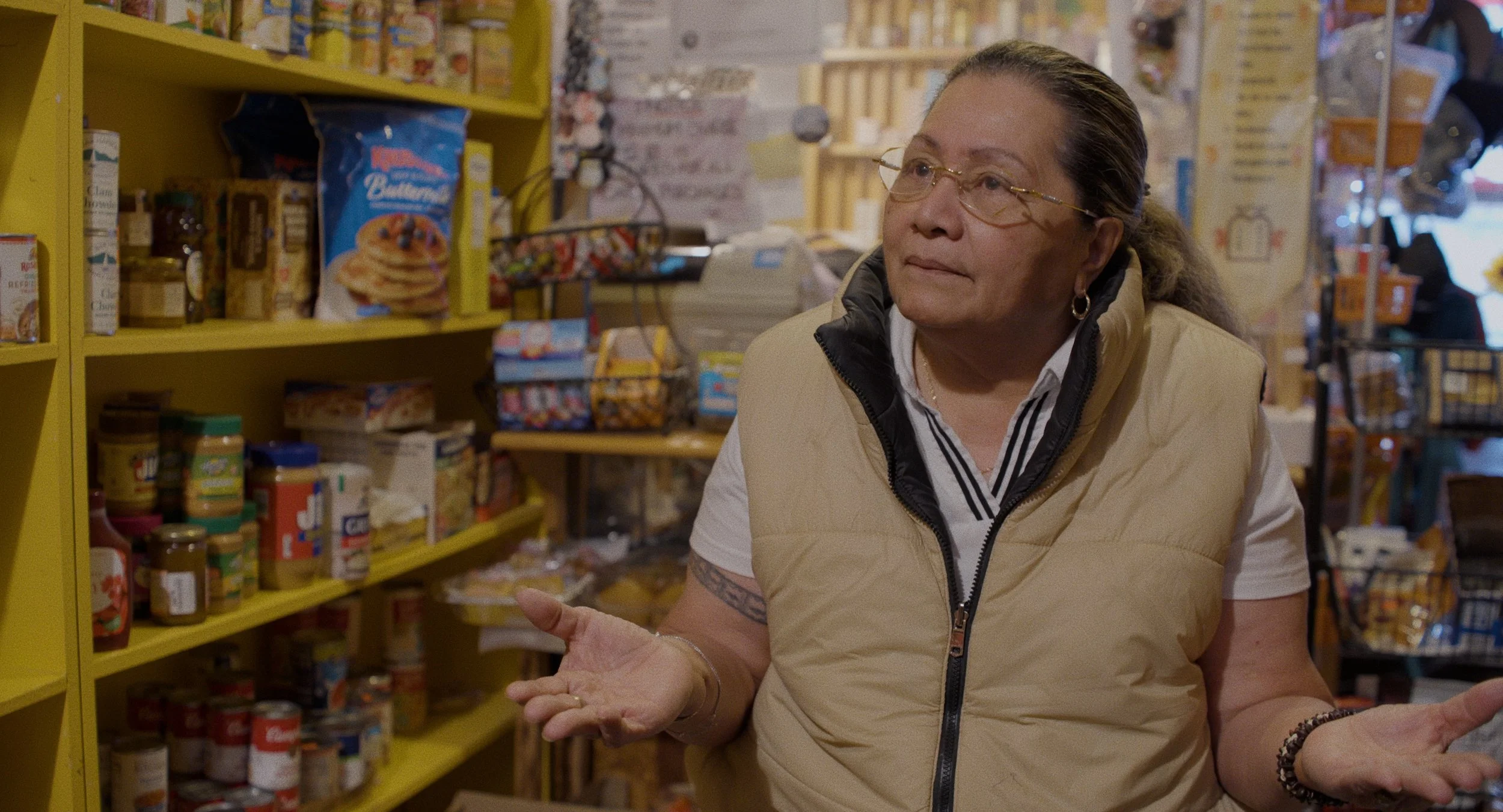
Shopkeeper and minister Mili Suli in the Kozy Korner shop within Begich Towers. (Photo courtesy of PogieJoe Productions)