USS Ted Stevens to be commissioned in Whittier on Oct 3
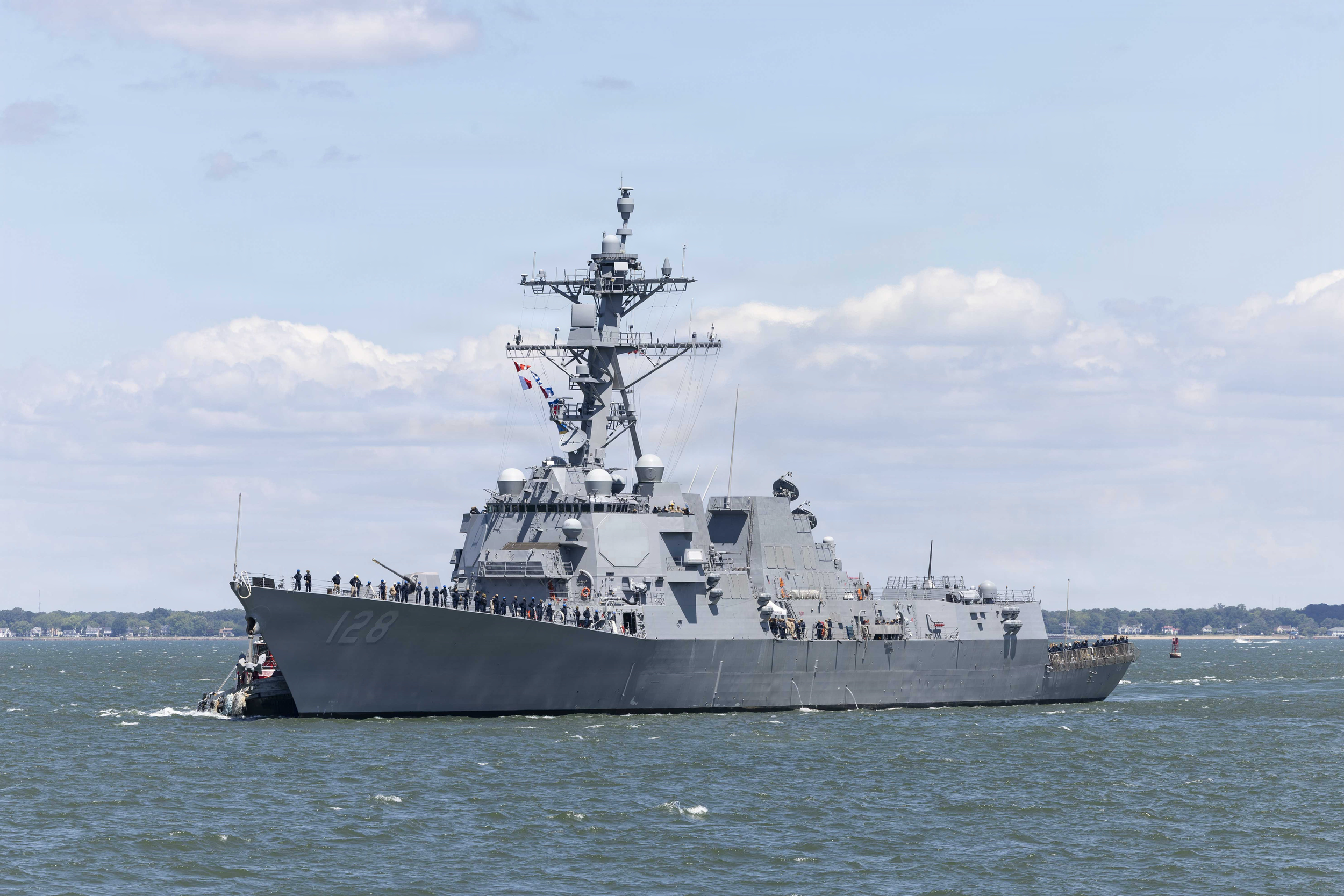
DDG 128 sails close to shore. (Photo courtesy of United States Navy)
By Chase Berenson
TNews Staffwriter
Next month the eyes of the United States Navy will be on Whittier for the commissioning of the future USS Ted Stevens. The ship is the Navy’s newest Flight III Arleigh Burke-class destroyer, and she carries the hull number DDG 128. The ship will be homeported at Naval Station Norfolk, the world’s largest naval station in Norfolk, Virginia, but she is making the voyage north for her commissioning as she is being named after Alaska’s former Senator.
Per Navy protocols, the ship is not formally named until she is commissioned. Until the ceremony on Oct 3, she is known as the “future USS Ted Stevens“ or as “DDG 128.”
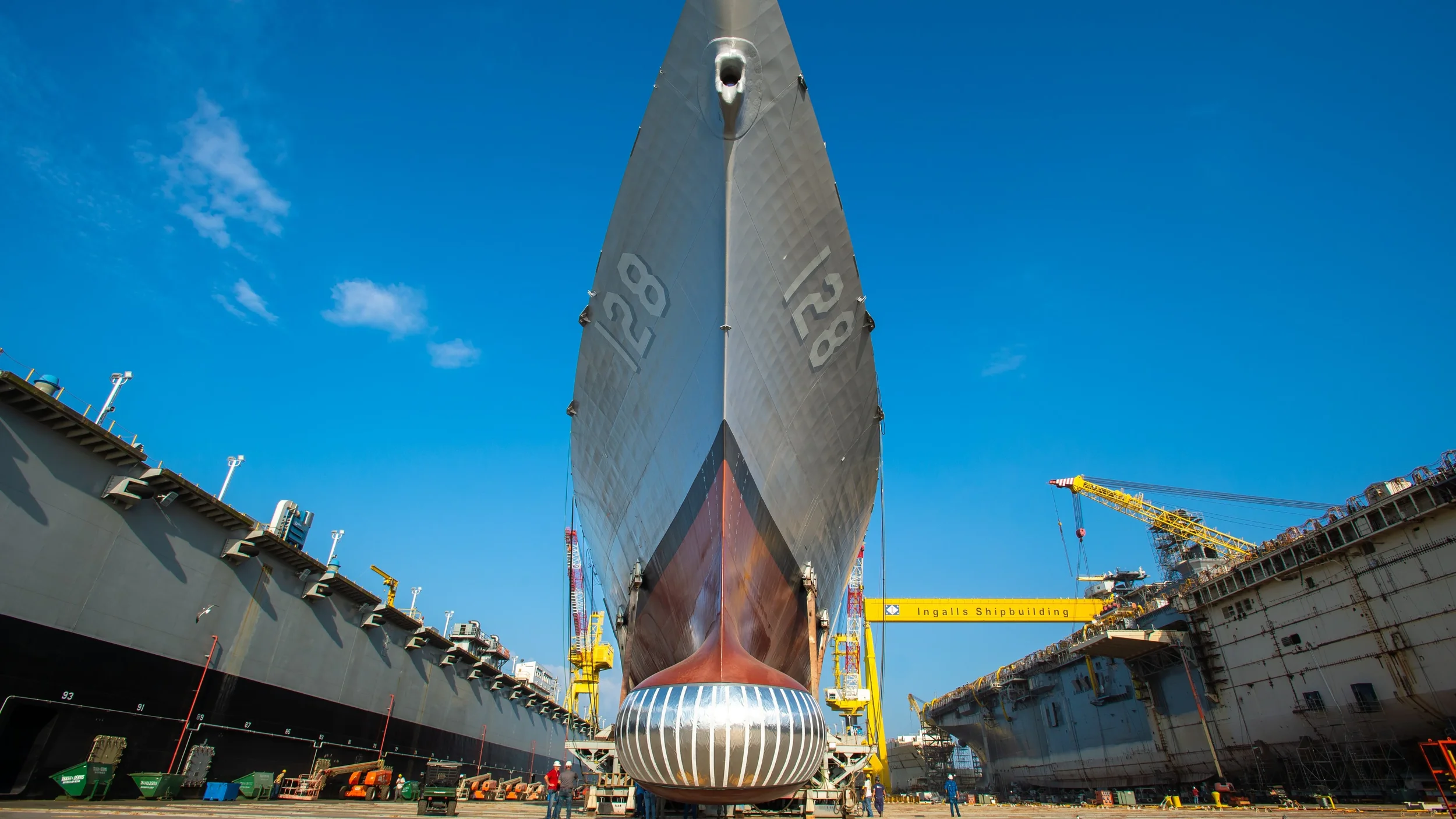
DDG 128 under construction at Ingalls Shipbuilding in Pascagoula, Mississippi. (Photo courtesy of Ingalls Shipbuilding)
Ted Stevens: The Vessel
DDG 128 is the third ship of the Navy’s Arleigh Burke-class destroyer Flight III series. Arleigh Burke-class destroyers are a class of guided-missile destroyers that feature the Aegis Combat System and the SPY-6(V)1 multi-function passive electronically scanned array radar. Hung Cao, Acting Secretary of the Navy and current nominee for Secretary of the Navy, described the vessel by saying, “Equipped with cutting-edge systems and capabilities, USS Ted Stevens is ready to answer our nation’s call to counter aggression and safeguard our interests by providing a powerful advantage at sea.”
The Arleigh Burke-class ships are multi-mission destroyers, and the Navy uses these warships in a variety of contexts. They are designed specifically to maintain seaworthiness while operating at high speeds even in rough seas. They can be used for anti-aircraft warfare with surface-to-air missiles, antisubmarine warfare with antisubmarine rockets, land strikes with Tomahawk missiles, and antisurface warfare with ship-to-ship missiles.
These vessels also have heliports and hangars for multiple MH-60 Sea Hawk helicopters manufactured by Sikorsky. The MH-60 Sea Hawks are based on the more well known UH-60 Black Hawk helicopters operated by the Army. Black Hawks are common sights in Southcentral Alaska because the Alaska Army National Guard uses them for missions such as search and rescue, medical evacuations, and disaster response from Joint Base Elmendorf-Richardson in Anchorage.
The different variants of Arleigh Burke-class ships are known as Flights. There have been four Flights, but due a unique numbering method this vessel is in the most modern Flight known as Flight III. This vessel is the third in Flight III.
The Aegis Combat System is made by Lockheed Martin and is a weapons system that tracks and guides the vessel’s weapons to destroy energy targets. Using radio frequency, the Aegis system communicates with missiles and offers updates in the missile’s course to the target. The name “Aegis” dates to Greek mythology, as Aegis was the name of Zeus’ shield.
Complementing the Aegis system is the SPY-6(V)1 radar system made by Raytheon. This radar system has a range of 230 miles and provides 360o degree coverage for continuous situational awareness. Its antenna links directly to missiles, eliminating a separate missile communications uplink system.
Admiral Daryl Caudle, Chief of Naval Operations, said, “USS Ted Stevens represents the combat-ready, lethal force our Navy needs to deter aggression and defend our nation.” According to the USS Ted Stevens Commissioning Committee, this vessel is the “most powerful warship in the world.”
Arleigh Burke-class vessels are 505-515 feet long and 66 feet wide. They are powered by four General Electric LM2500 gas turbines that generate 26,250 horsepower each and can reach a top speed of approximately 30 knots (35 miles per hour). They have a range of approximately 4,400 nautical miles (5,100 miles) and are crewed by 303-323 sailors.
The Pentagon estimates that each Flight III ship costs approximately $2 billion, which includes approximately $1 billion for the ship and approximately $1 billion for the ship’s equipment.
The vessel left its future homeport of Naval Station Norfolk in June for the long trip to Whittier. She spent time from June 15 until Sep 2 at Naval Station Mayport in Jacksonville, Florida. On Sep 9 the vessel was in Colón on the Atlantic side of Panama preparing to transit the Panama Canal, and on Sep 10 she arrived at Vasco Núñez de Balboa Naval Base on the Pacific side of Panama; Vasco Núñez de Balboa Naval Base is a Panamanian Navy facility where Panama allows US forces to use the base for joint security. She arrived at Naval Base San Diego in San Diego, California, on Sep 17. Lily Stevens Becker, the youngest of Senator Ted Stevens’ six children, visited the vessel on Sep 20. On Sep 21 she left San Diego for her voyage north to Whittier.
The destroyer is captained by Mary Hays, Commanding Officer. In an homage to Senator Ted Stevens, the ship’s motto is “Lead with Courage.”
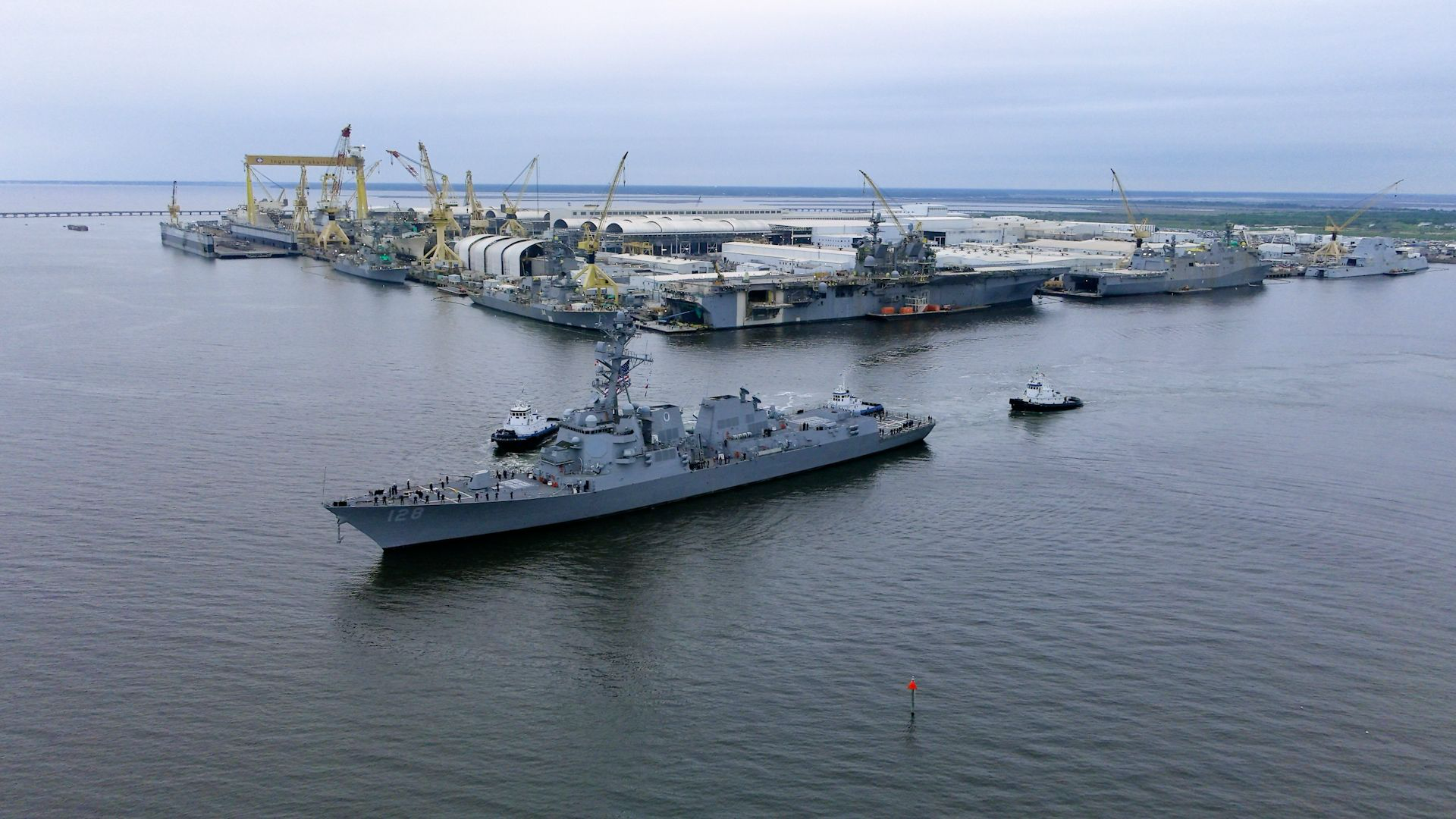
DDG 128 sailing away from the Ingalls Shipbuilding yard in Pascagoula, Mississippi, shortly after construction was complete. (Photo courtesy of Ingalls Shipbuilding)
Ted Stevens: The Man
Ted Stevens was born on Nov 18, 1923, in Indianapolis, Indiana. His first exposure to Alaska came in 1950 as a young attorney working for Northcutt Ely in Washington, DC, where he assigned to handle the legal affairs of Emil Usibelli, the founder of Usibelli Coal Mine in Healy, who was trying to sell coal to the military. Stevens first set foot in Alaska in February 1953 when he and his wife Ann Stevens moved to Fairbanks, which Ann described as “a six-month trial basis.” There was no way to know at that moment how much Alaska would change their lives, and how much their lives would change Alaska.
Ted Stevens’ Military Career:
Before moving to Alaska, Ted Stevens served in the Army Air Corps during World War II. The Army Air Corps is the predecessor to today’s Air Force, and Stevens was a military pilot. He flew missions with the 14th Air Force in support of the Flying Tigers in the China Burma India Theater, flying over “The Hump.”
The Hump was the name for the Himalayas, where military pilots such as Stevens flew Curtiss C-46 Commando and Douglas C-47 Skytrain cargo aircraft from India to China to support the Chinese war effort against the Japanese. This transport route was required after Japanese forces blocked the Burma Road in 1942 and prevented the movement of cargo on the ground.
Vice Admiral Jeffrey Hughes, Deputy Chief of Naval Operations for Warfighting Development, described Stevens’ military experience by saying, “This entailed dangerous mountain flying over the Himalayas with a significant risk of Japanese aerial attack. For his gallant, valiant service, he was awarded two Distinguished Flying Crosses and Two Air medals for exceptional airmanship.”
This experience helped inspire the naming of the USS Ted Stevens. Vice Admiral Joe Cahill, commander, Naval Surface Force, U.S. Pacific Fleet, says, “USS Ted Stevens is built for the fight, carrying the legacy of service, courage, and determination of a warrior who flew combat missions in World War II and devoted his life to serving his country.”
Ted Stevens’ Senate Career:
After losing campaigns for one of Alaska’s seats in the United States Senate in 1962 and 1968, Stevens was appointed to the role in December 1968 upon the death of Senator Bob Bartlett. Once Stevens was in the Senate, he was reelected several times and remained in place for over 40 years until January 2009. He served as the President Pro Tempore in the Senate from 2003-2007, and he set the record at the time for the longest-serving Republican Senator.
In Washington, DC, he was known as a fierce supporter of Alaska, while throughout his home state he became known as Uncle Ted. He passed several major bills that impacted Alaska throughout his career in the Senate, including Alaska Native Claims Settlement Act in 1971, the Trans-Alaska Pipeline Authorization Act in 1973, and the Magnuson-Stevens Fishery Conservation and Management Act of 2006.
In addition to strong support for the state of Alaska, Stevens was also a major proponent of national security and of the military. “Senator Stevens worked tirelessly to improve the lives of Alaskans and fellow Americans,” Vice Admiral Jeffrey Hughes, Deputy Chief of Naval Operations for Warfighting Development, said. “He had a strong and steady hand in crafting legislation that strengthened the military and his efforts to improve the national security of the United States are still evident today.”
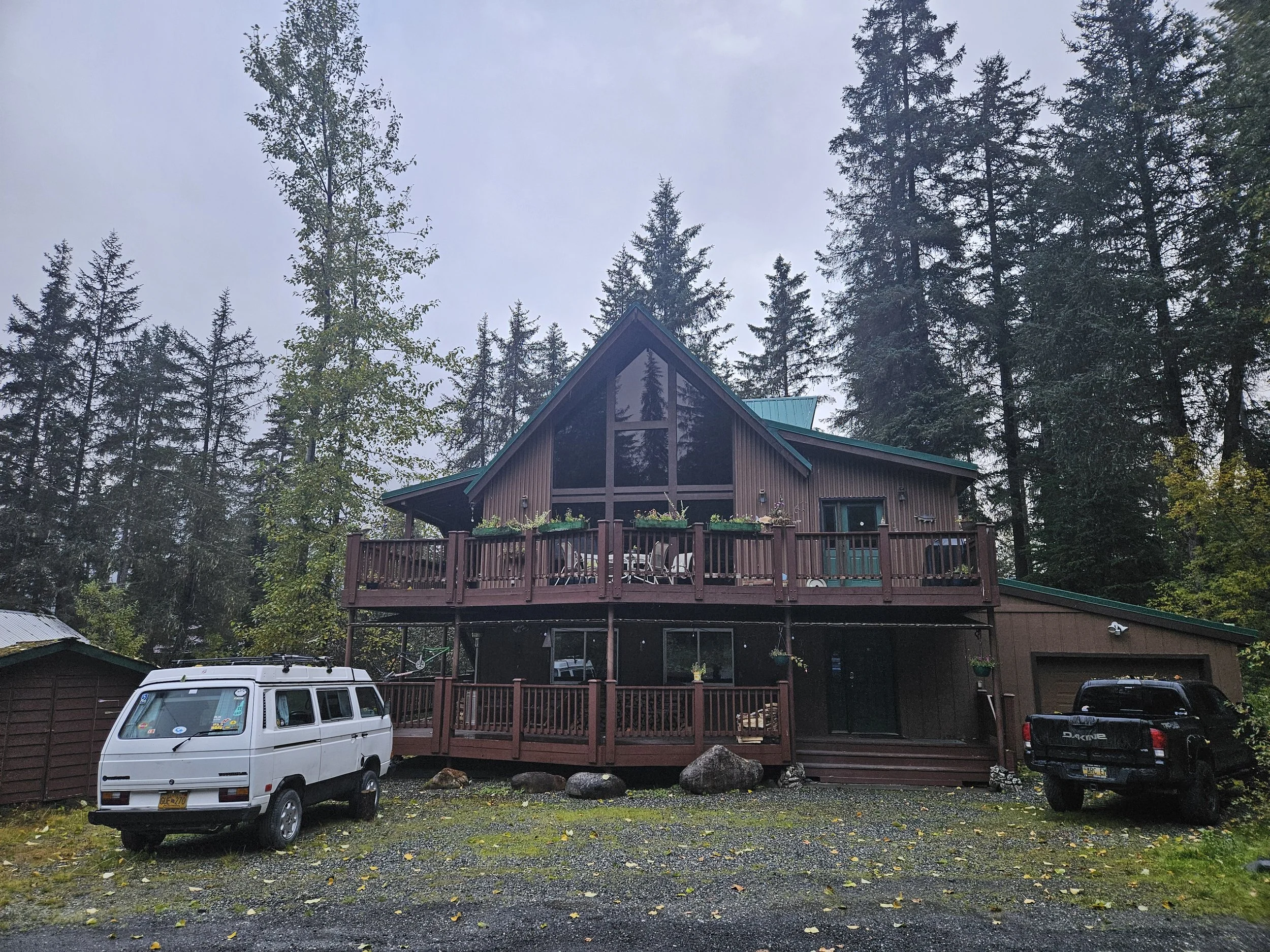
Ted Stevens’ former home in Girdwood as seen on Sep 25. (Photo by Chase Berenson)
Ted Stevens in Girdwood:
Though Stevens was well-known throughout the state of Alaska, he was a particular character in his hometown of Girdwood.
Girdwood found itself thrust into the national spotlight in July 2008 when a federal grand jury indicted Stevens on seven felony charges. He was charged with seven counts of making false statements on his Senate financial disclosure forms. These charges stemmed from renovations and construction work performed on his Girdwood home that were provided by VECO Corporation, an oilfield services company that performed significant work on Alaska’s North Slope.
Stevens was found guilty of all charges by a federal jury in October 2008, just days before the election. Stevens lost his reelection bid, and he stepped away from the Senate when his term ended in January 2009.
Later in 2009 Stevens’ conviction was dismissed due to prosecutorial misconduct. An investigation by the Justice Department discovered that prosecutors had intentionally withheld evidence from the defense.
Once the convictions were cleared, Stevens announced his intention to run again for Senate and win his seat back. He never had the chance to follow through with that campaign, as he passed away on Aug 9, 2010, in a plane crash in the Muklung Hills near Aleknagik.
Ted Stevens: The Commissioning
The commissioning of the USS Ted Stevens will occur in Whittier on Saturday, Oct 3. It was originally scheduled to be hosted at the Chugach Glacier Gateway dock, but the dock fire earlier this month has resulted in a change of plans. The commissioning will now be hosted at the dock owned by Holland America Princess.
A commissioning is a ceremonial event, and it marks the moment that a ship officially enters the fleet of the US Navy. The top highlight of a commissioning is typically the moment that the vessel enters service and the crew boards the ship. The ceremony will last approximately 90 minutes, and it will end with the captain receiving orders and the ship’s sponsors calling on the crew to “man our ship and bring her to life.”
This commissioning is the first one to be held in Whittier, and the first commissioning in Alaska since 2013 when the USS Anchorage was commissioned at the Port of Alaska in Anchorage. “Hosting the commissioning of the USS Ted Stevens in Alaska is a profound honor for our state,” said Representative Chuck Kopp (R), who serves as Vice President of the USS Ted Stevens Commissioning Committee.
Alaskans are invited to attend the commissioning, but they must RSVP and receive tickets in advance from the USS Ted Stevens Commissioning Committee. On the day of the event the tunnel into Whittier will be closed to all private vehicles, limiting transportation into the community to train or bus for event ticketholders organized by the Commissioning Committee. People who couldn’t get tickets in advance or can’t travel to Whittier can watch the livestreamed event on the Internet.
Though Ted Stevens himself of course won’t attend, he would be familiar with the event and the details of a commissioning. In 1986, he spoke at the commissioning of the USS Alaska submarine in 1986 in New London, Connecticut.