AWWU updates Girdwood infrastructure under residents’ feet and roads
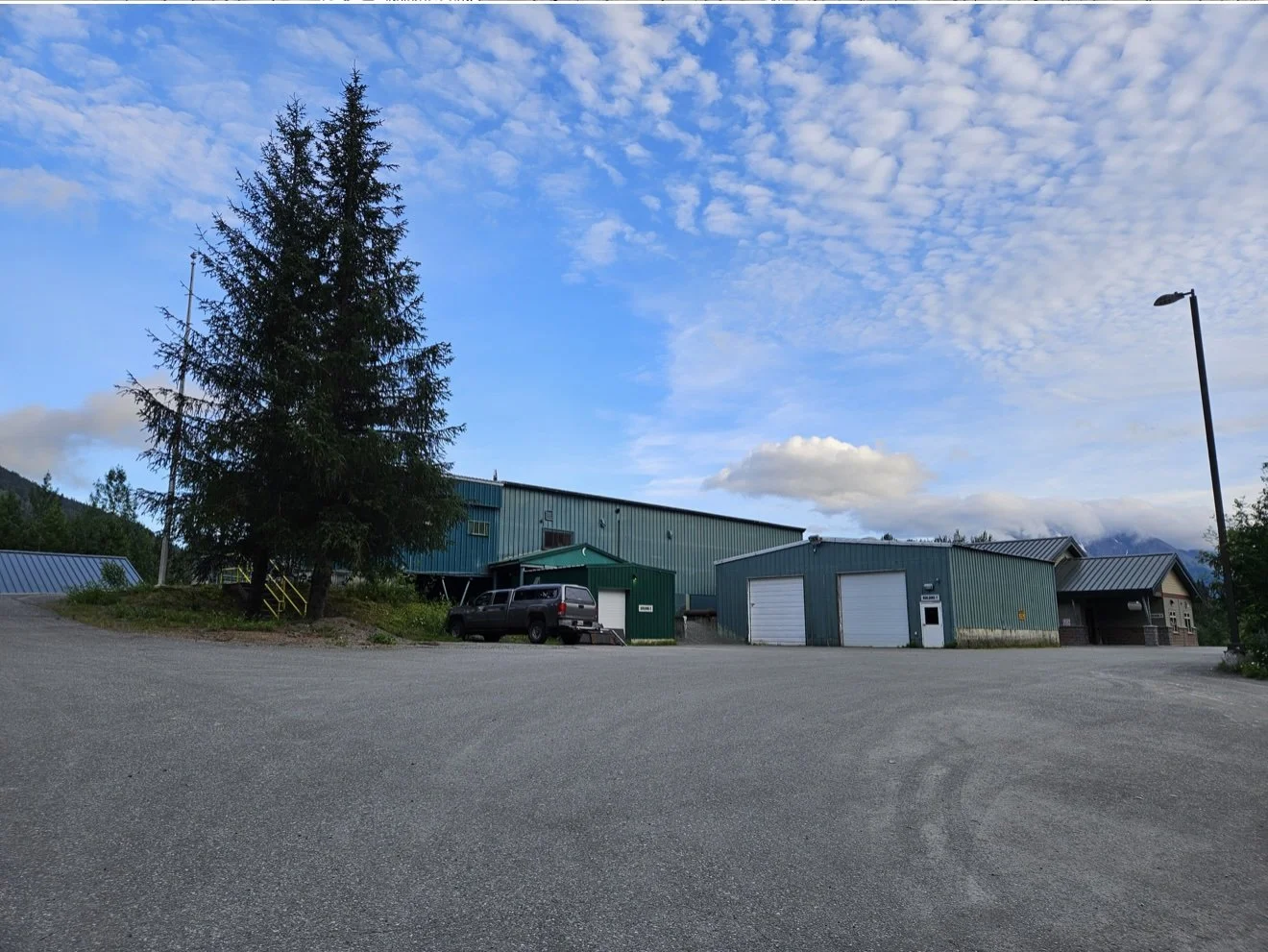
AWWU’s Girdwood Wastewater Treatment Facility, as seen on August 2nd, 2026. (Photo by Chase Berenson)
By Chase Berenson
TNews Staffwriter
One of the most important elements of water utility infrastructure is what removes the wastewater from our homes after we have used the water in our kitchen sinks, showers, and other plumbing fixtures. Wastewater infrastructure isn’t generally thought about too much, but Anchorage Water and Wastewater Utility (AWWU) is investing in improvements in Girdwood’s wastewater system.
AWWU is the municipally owned utility that provides water and wastewater services in the Anchorage Bowl, Eagle River, and Girdwood. AWWU’s mission is “to provide safe and reliable water and wastewater services today and into the future.” To increase that reliability, AWWU is planning the Girdwood I&I Sanitary Sewer Manhole Rehabilitation project.
Throughout AWWU’s service area, the utility owns 15,621 wastewater manholes, while only 3.2% of them are in Girdwood with the community’s 493 wastewater manholes. Of those 493, this project features improvements to 107 of them: 102 will be rehabilitated while five will be entirely replaced.
The goal of this project is to reduce “I&I” as mentioned in the project name. I&I stands for “inflow and infiltration,” which are two ways that excess water enters the wastewater system. Inflow consists of stormwater that flows into the wastewater system through system openings (such as the tops of manholes), while infiltration describes groundwater infiltrating the wastewater system by getting into cracks, joints, or deteriorated underground infrastructure (such as the underground portions of manholes). Sandy Baker is AWWU’s Public Outreach Coordinator, and she says the utility, “has been actively reducing I&I throughout the Girdwood wastewater collection system for more than a decade. Because groundwater levels are relatively high in Girdwood, reducing I&I remains a priority to improve system reliability and reduce unnecessary flows to the treatment system.” AWWU must pay to treat all the water that makes it to the wastewater treatment plant through the wastewater system; when stormwater or groundwater must be treated, that increases the utility’s costs and in turn leads to higher rates for utility customers. By reducing the amount of non-wastewater in the wastewater system, customers will pay lower rates in the long run.
AWWU inventoried Girdwood’s manholes last year, and the manholes being rehabilitated or replaced in the project were selected based on their individual condition. Depending on the specific work required for each manhole, it is expected that the work will lead to a ground disturbance of either 25 square feet, 64 square feet, or 225 square feet. AWWU’s Baker explains that rehabilitation may include work such as “Chemical grouting to seal infiltration, installation of internal joint seals, replacement of lid gaskets, or partial structural repairs to deteriorated manhole sections.” Alternatively, if a manhole’s condition is so poor that it can’t be rehabilitated, it will be completely replaced. According to paperwork that AWWU filed with the Alaska Department of Environmental Conservation (DEC), the total amount of ground disturbance will be 3,500 square feet. Ancillary work as part of the project will also include dewatering, sewer flow control, landscaping, and miscellaneous surface restoration. Five of the manholes are located within the 100-year floodplain, so they will also receive additional work such as elevating the manhole. Additionally, one manhole is located in a wetland, which required AWWU to receive a permit from the United States Army Corps of Engineers.
The project is expected to cost $2,480,000, but the project is being funded by DEC’s Alaska State Revolving Fund (SRF). The SRF loans money to qualified water utilities to improve their drinking water or wastewater infrastructure. The SRF provides below market-rate loans with repayment terms of up to 30 years, and some projects may even be eligible for principal forgiveness. AWWU’s Baker says, “Using SRF financing helps reduce borrowing costs compared to conventional financing, resulting in long-term savings for utility customers.”
AWWU is currently planning and designing the project, though Girdwood residents won’t see manhole work begin until spring 2027. Many manholes are located in road rights-of-way, and AWWU must wait until the winter’s deep freeze has left before they can excavate. AWWU’s Baker says that utility customers won’t notice any changes to their wastewater service during the project.
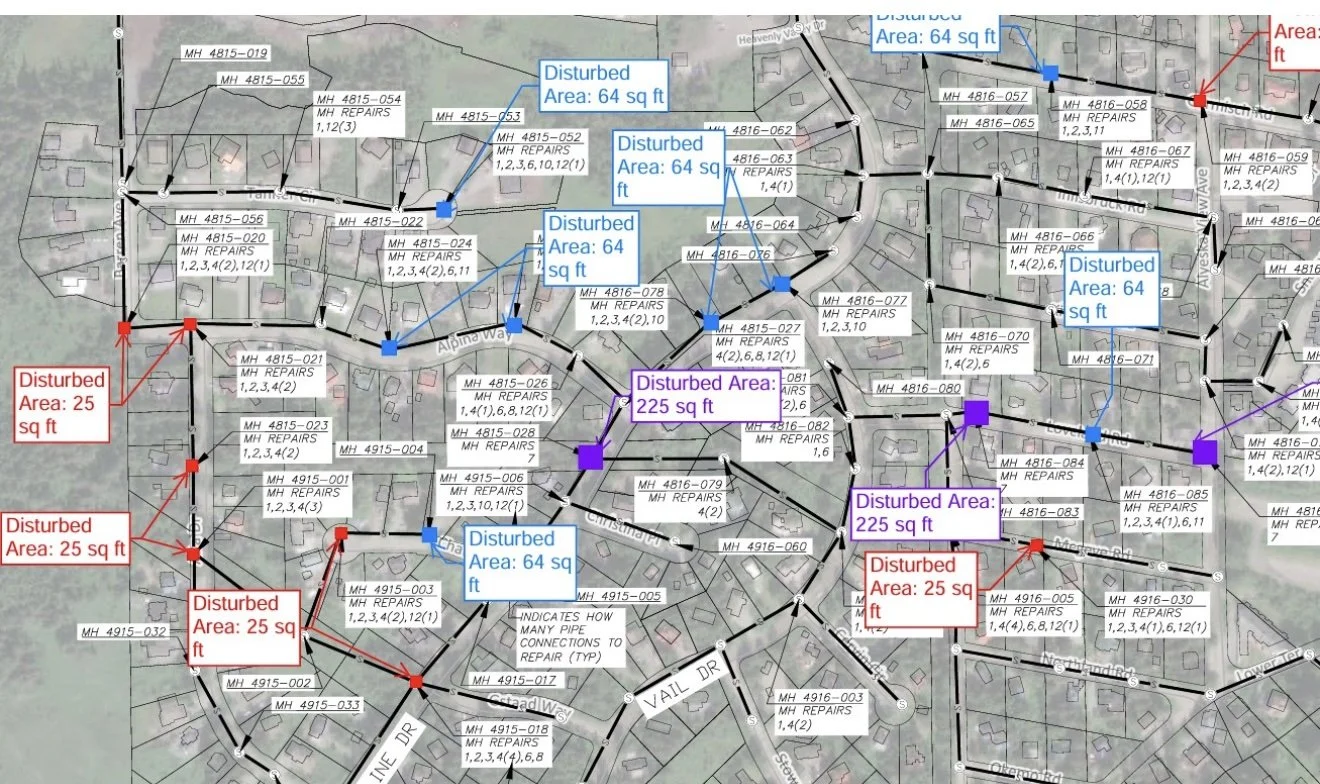
A portion of the engineering plan showing some of the manholes in Girdwood’s Timberline area; the map illustrates the approximate locations of work and the size of ground disturbance at each manhole. (Source: Screenshot of one of Stephl Engineering’s 95% design plans, submitted by AWWU to DEC, and subsequently released by DEC pursuant to a Public Records Request.)