Portage Visitor Center Closes During Mid-July Rainstorm That Raised Landslide Threat
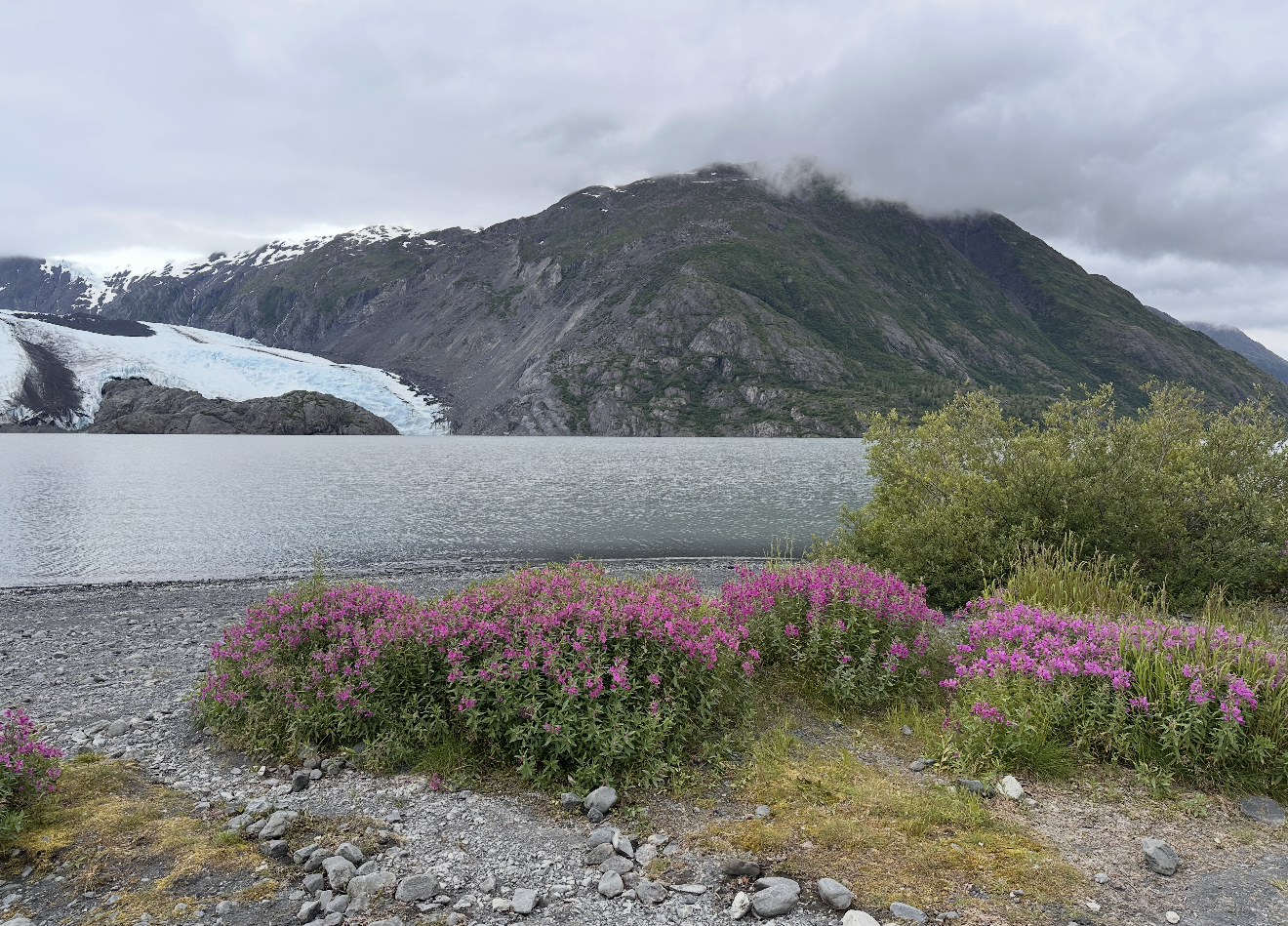
A bluff to the right of Portage Glacier, no longer buttressed by the receding ice flow, is at risk of collapsing into Portage Lake triggering a massive tsunami, say geologists. (Photo by Soren Wuerth)
Public Notification of Risk Limited
By Soren Wuerth
TNews Editor
For a pair of Swiss travelers standing on a beach opposite Portage Glacier the German word for "landslide" sounds like something harsher: "erdrutsch".
Informed about the threat of "erdrutsch" and tsunami, a menace now widely reported, the couple took a last look at the glacier across the lake and quickly began their hike out.
On a Monday in late July there were dozens of hikers on an out-and-back, two-mile trail that crosses an 800-foot pass to Portage Lake. It was just over a week after a torrential rainstorm raised concerns about a looming landslide abutting the glacier.
More than four inches of rain fell in Portage July 19-20, according to data from the Alaska Climate Research Center.
In an unprecedented move, the U.S Forest Service closed its Begich, Boggs Visitor Center and pulled its employees from a bunkhouse, according to Forest Service staff who declined to be identified.
The facilities are about two miles from a creeping landslide that geologists warn could collapse any moment—especially following heavy rains or an earthquake—sending a catastrophic tsunami up to 1,000 feet high careening across the lake and through Portage's narrow valley.
Independent geologist, Bretwood "Hig" Higman, estimates there is a 1-30 chance that a 50-million cubic meter slab of rock could be released into Portage Lake. Such a colossal slide could even send a wave up and over the pass and into Whitter on the other side, said Higman, who has placed homemade monitors at the site to gauge widening cracks in the landmass.
Visitors hiking the popular Portage Pass trail that Monday knew nothing of the landslide threat, however. A trailhead sign on the Whittier side of the Anton Anderson tunnel offered no information.
Meanwhile nothing has been posted at the visitor center to warn the public about the threat of a tsunami that would allow minutes to escape.
The Forest Service acknowledges the threat. It's website offers a short statement stating, "At this time, there is no indication that a landslide is imminent. However, landslides can happen at any time, and a sudden collapse into the water could trigger a tsunami that could have devastating effects to the Visitor Center. All Portage Valley recreationists should remain vigilant and be prepared to evacuate immediately.”
A Forest Service spokesperson did not respond to a request for comment.
Although clear skies are mostly forecasted next week, the National Weather Service predicts above normal precipitation as a result of El Niño influences.
“Strong El Niño events typically correlate to a warmer and wetter autumn and winter season, particularly along the Souther AK coast. Typically, a higher percentage of precipitation will fall as rain along the coast due to warmer than average temperatures,” the NWS wrote in its Anchorage Climate Outlook.
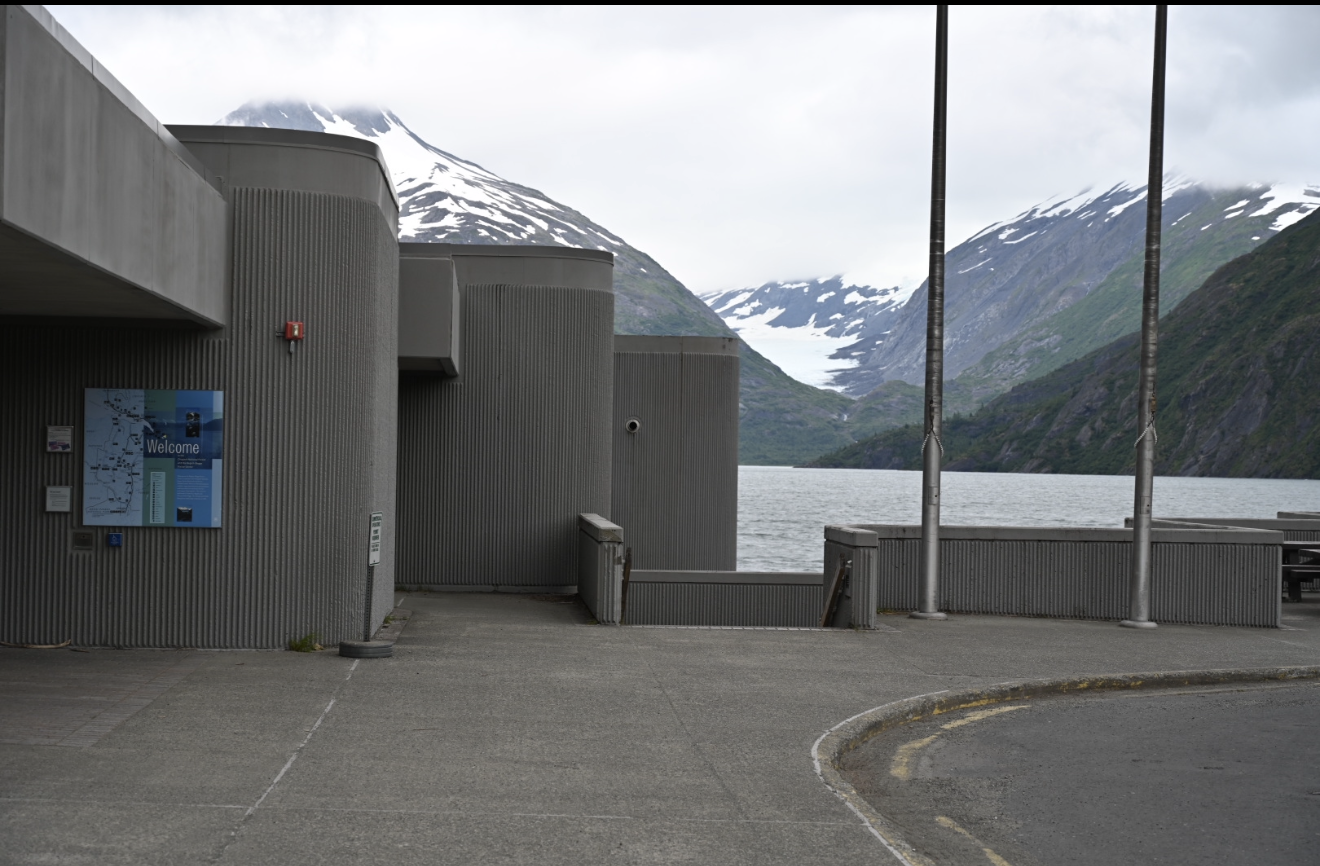
The Begich, Boggs Visitor Center is two miles away from Portage Glacier and a creeping landslide. (Photo by Soren Wuerth)
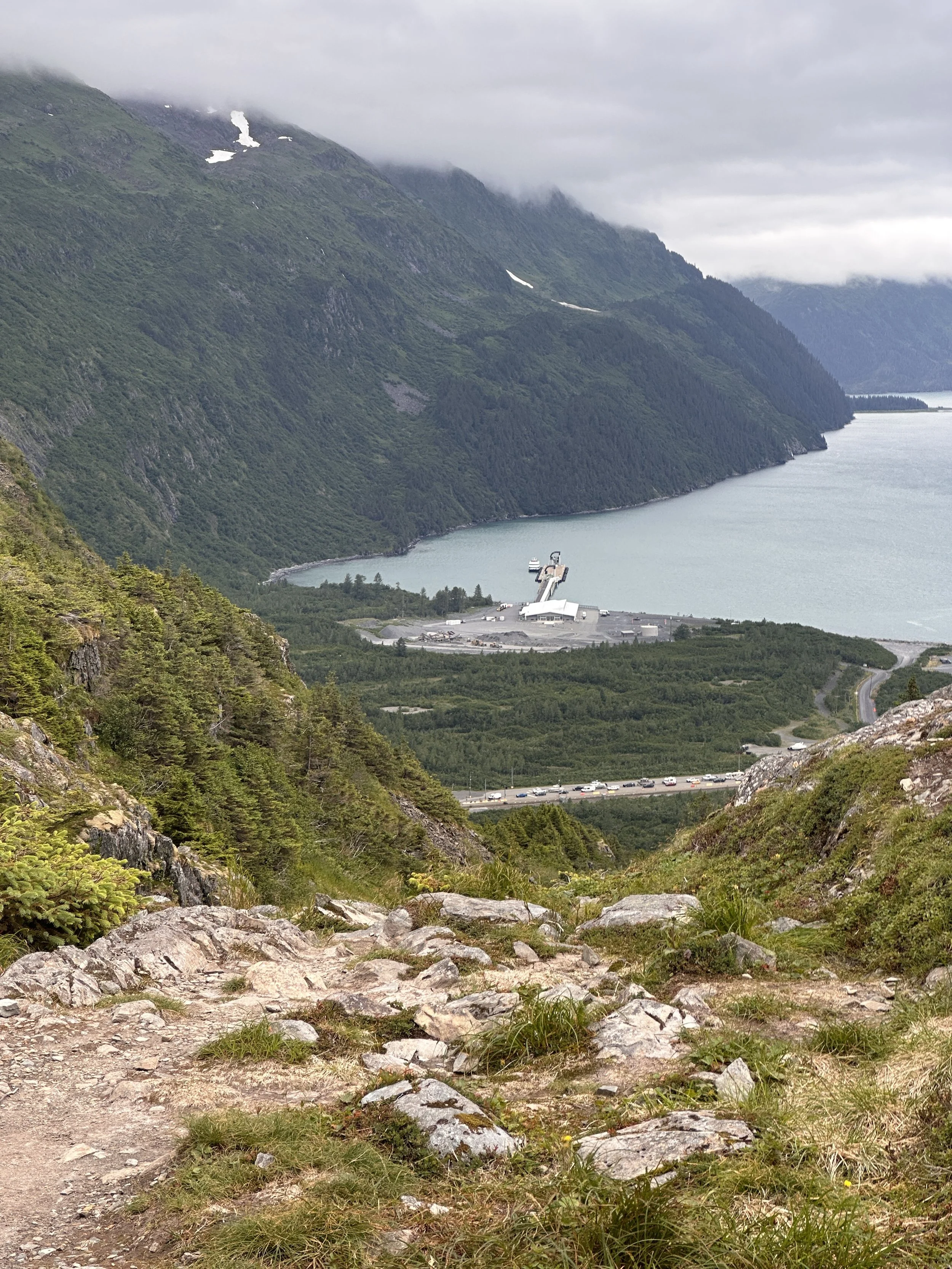
A geologist says a tsunami generated by a landslide could crest Portage Pass. (Photo by Soren Wuerth)
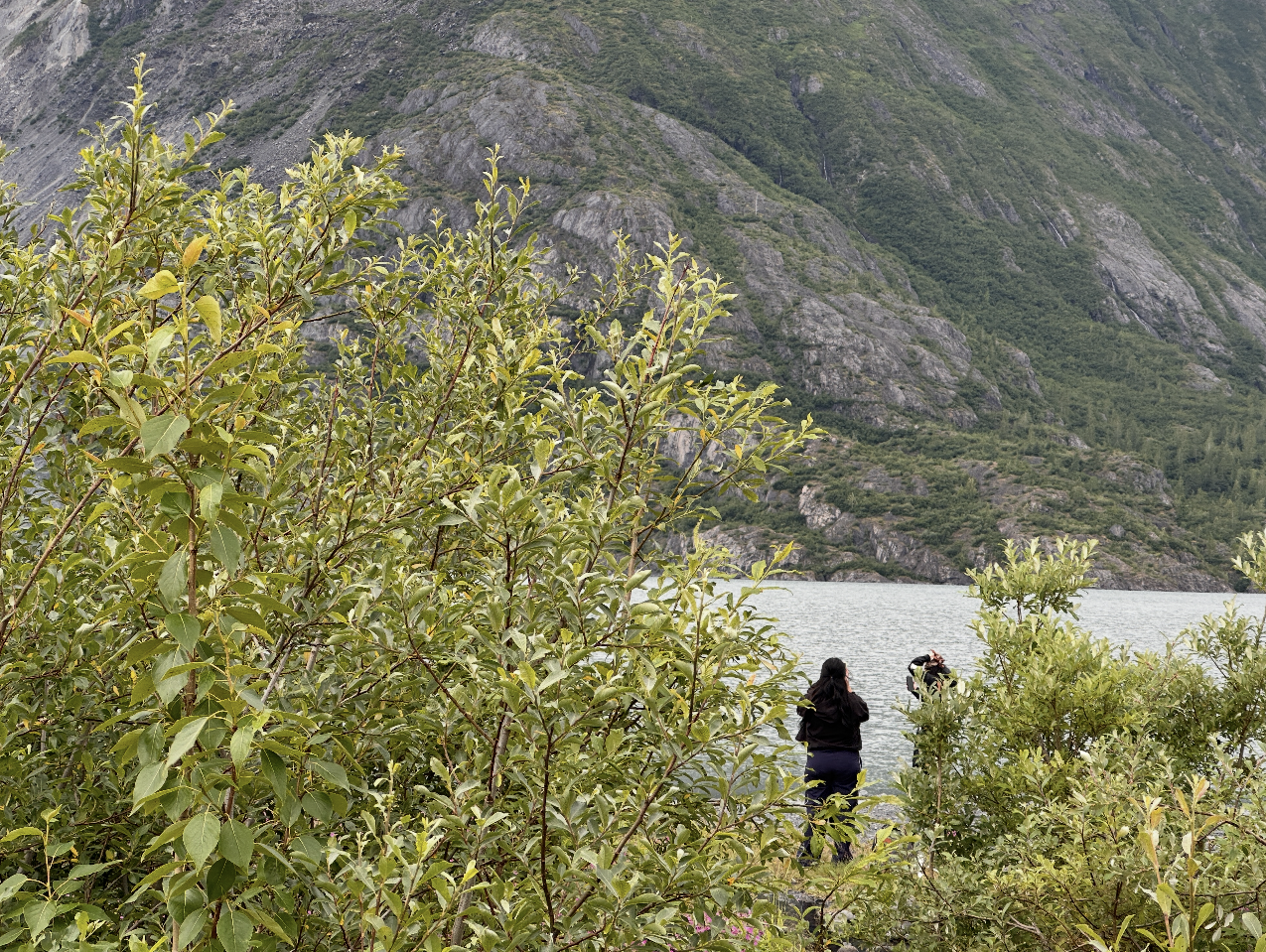
Hikers take photos at the shore of Portage Lake across from a massive, slow-moving face of rock. (Photos by Soren Wuerth.)
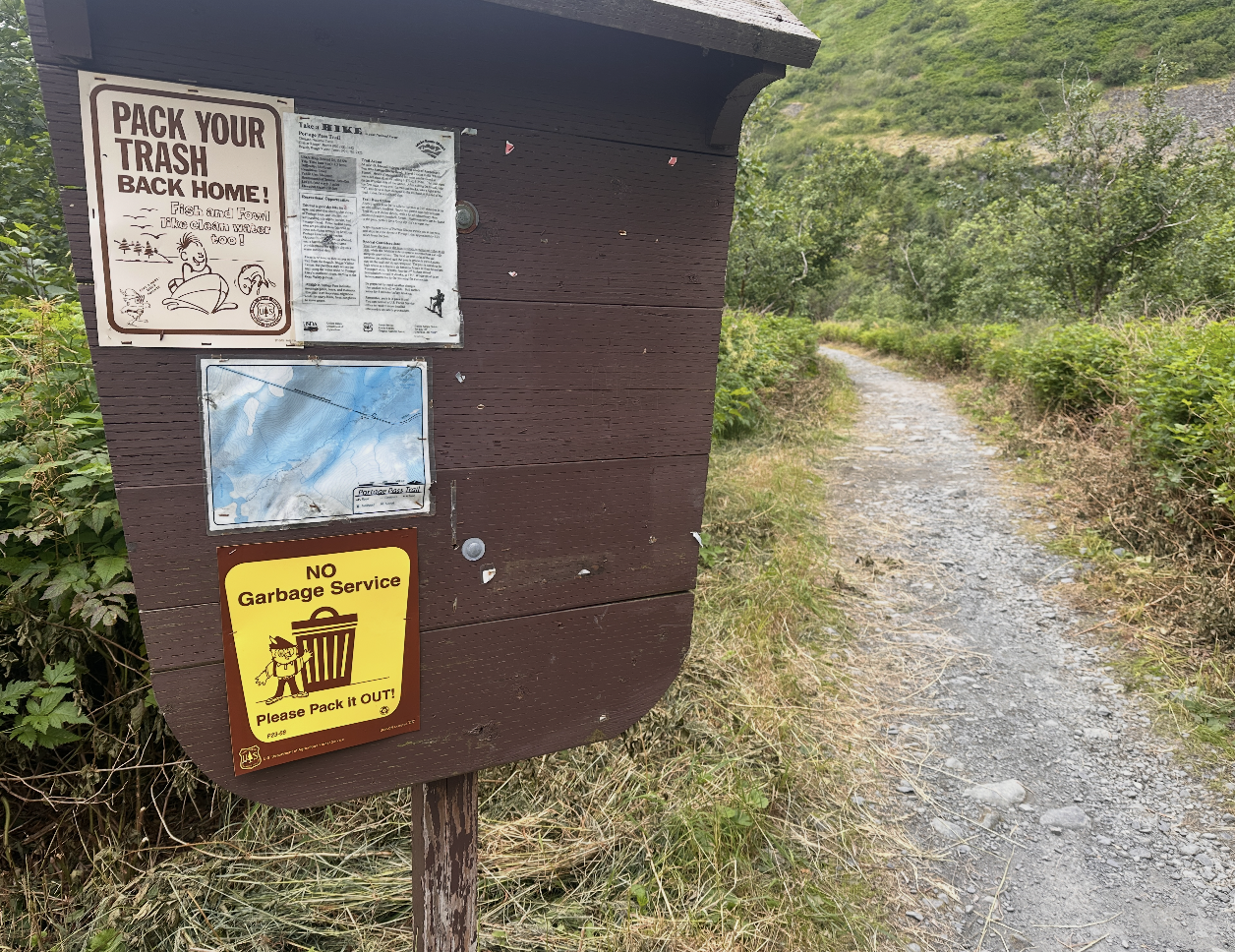
A signpost at the entrance to the popular Portage Pass trail offers no warning to hikers. (Photo by Soren Wuerth)