Tiny Green Bugs Hop Into Town
Leafhoppers Suddenly Everywhere
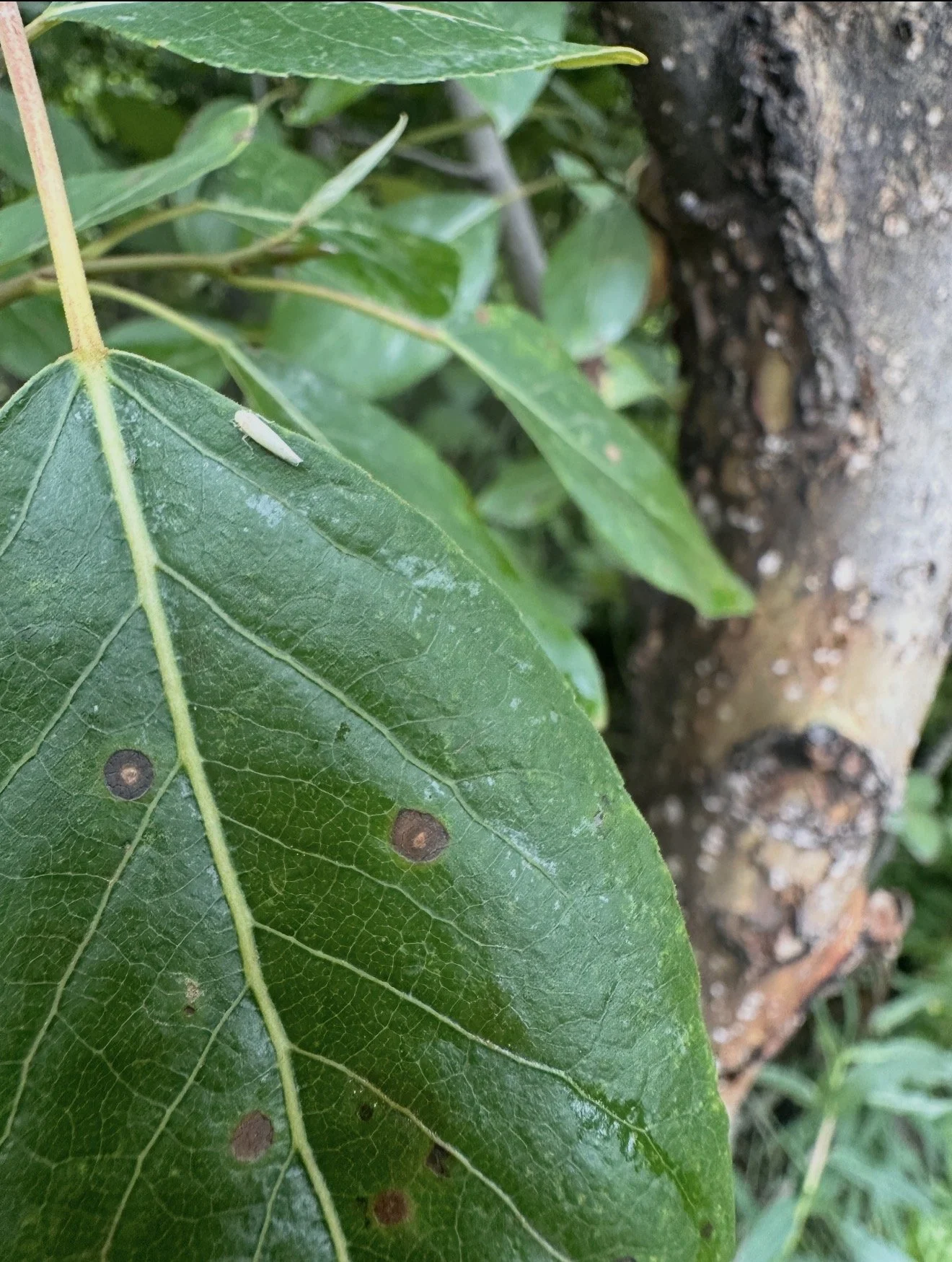
A leafhopper climbs on an Alder leaf recently. The little insect has infested Girdwood in surprising numbers. (Photo by Soren Wuerth)
By Soren Wuerth
TNews Editor
They flecked car windshields, flitted clumsily into doorways, flung themselves into hair and sucking sap from anything from willow to cottonwood.
Leafhoppers descended into Girdwood valley like a green snowfall during the past week. There were especially numerous in the Crow Creek's upper valley, a "plague" not seen in years, or ever.
Their larvae coated roads like grains spread by sand trucks. The little creatures speckled windows and screens. They were everywhere all at once.
"They come out when the sun dips down and I've never seen so many this year," Emily Conley wrote on Girdwood's Facebook page. Another local posted, "they are thick around the Merc!"
But don't worry, the tiny wedge-shaped insects, one of more than 20,000 species, don't bite.
And your gardens should be okay, according to Alex Wenninger, an entomologist with UAF's Integrated Pest Management Program.
"The nymphs tend to be fairly specific in the plants they feed on, so while they might impact some plants, it's unlikely that they could impact a wide variety of plants all at once," Winninger said in an email.
"Adults can be broader in their food habits, but adults don't tend to feed nearly as much as larvae do, so damage would likely be temporary. Plus, this late in the season, feeding from herbivores doesn't tend to be as damaging as it is early in the season, since plants are likely already beginning to prepare for winter," wrote Winninger.
Wenninger said "explosions" of leafhopper populations are not uncommon.
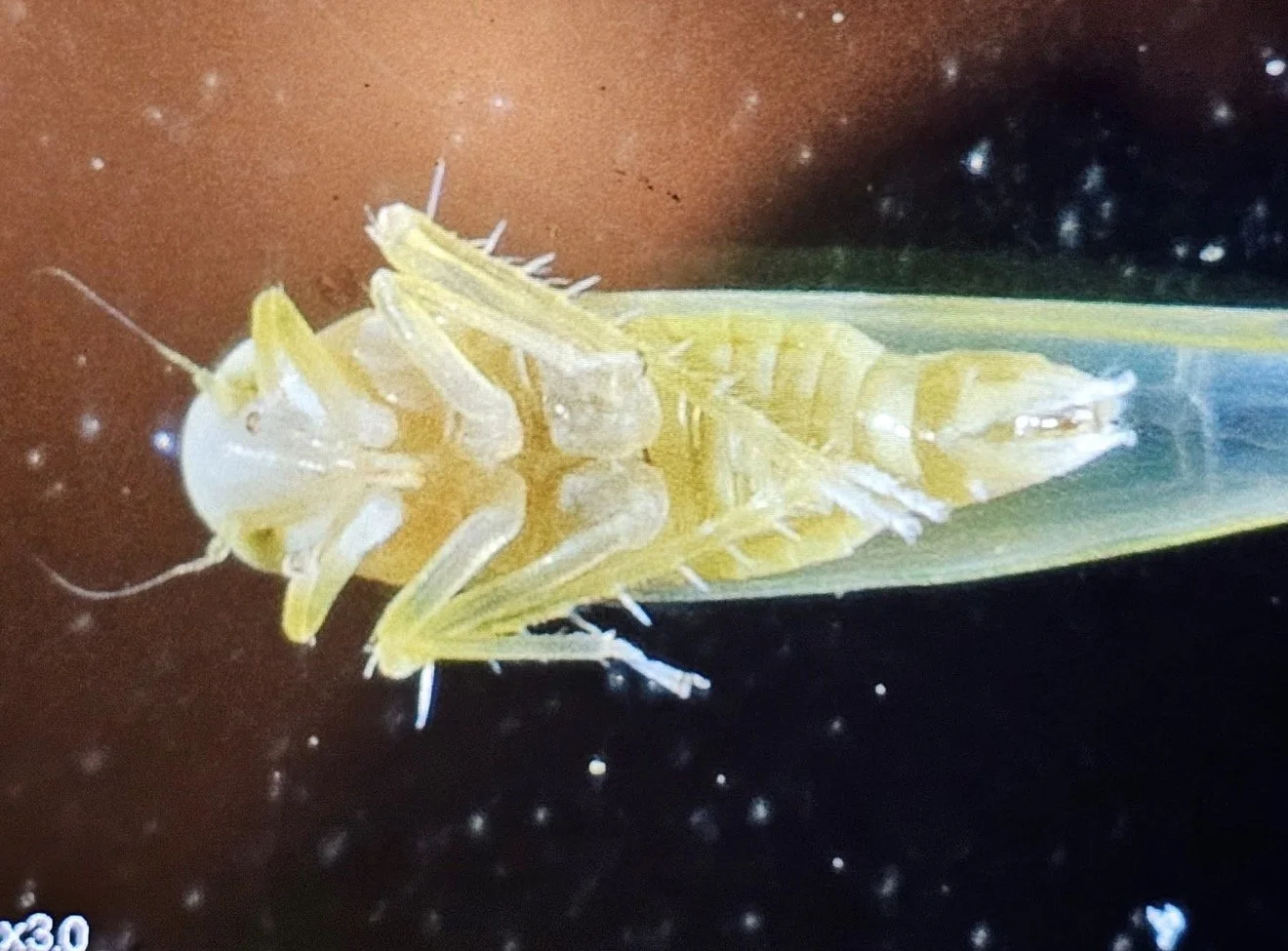
A close up of the notorious, and mostly harmless, leafhopper. (Photo by Fiddler Domela)
"Development period of the nymphs can be short, so when conditions are favorable populations can grow quickly. Weather is thought to be a factor in their mortality -- both windy and rainy conditions are thought to be sources of mortality. For flight, many of them prefer warm, windless weather, which may have contributed to seeing so many at once," she said.
Like nearly everything else in the natural world (and unnatural world), leafhopper population dips, swings, and surges may be significantly impacted by development-driven climate change, though research on these connections is just emerging.
A study from the journal npj Sustainable Agriculture reported "Nearctic" leafhoppers—those species spanning from Mexico to the Arctic—are expected to shift their habitats northward.
"Although the distribution of many leafhopper species is unknown or understudied in several areas of the Nearctic region, it could be plausible to anticipate that ongoing global warming and other climatic changes may offer Nearctic leafhoppers opportunities to expand their potential geographical range," npj stated in a July 2024 article.
The journal article also suggested temperature and continental winds could change distribution patterns of the tiny bug.
Though they don't bite, leafhoppers transmit diseases among plants.
"Over 100 leafhopper species carry phytoplasmas linked to more than 600 diseases affecting a thousand plant species worldwide," npj reported in the article"Potential Impact of Climate Change on Nearctic Leafhopper Distribution and Richness in North America".
Another study found leafhoppers benefit from warming temperatures and new species of "non-migratory" leaf hoppers were found in Nearctic regions.
Temperatures, humidity, and wind were elevated in the valley the week of the leafhopper "plague".
Then came the rain (again) and, just as mysteriously as they hopped in, they left.
Wait, there's one in my car!