Whittier Weighs Future of Waterfront Leases Amid Growth
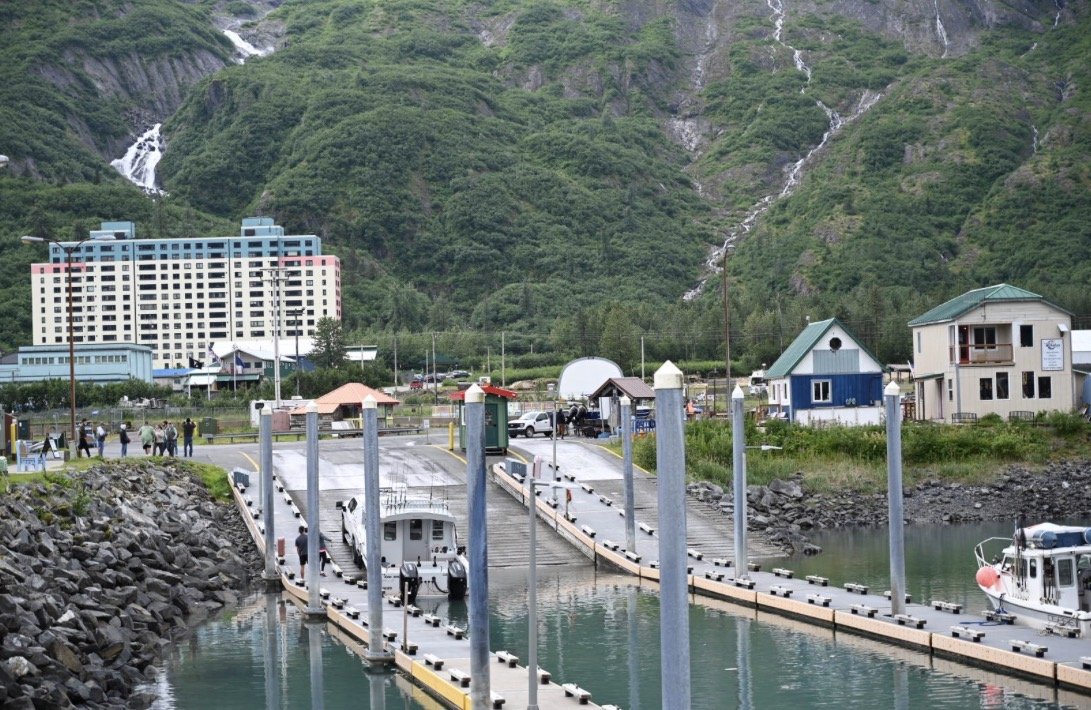
Most of Whittier's 277 residents live in the Begich Towers seen in the background. (Photo by Soren Wuerth
Prominent Business Could Face Competitive Bidding for City-Owned Land
By Soren Wuerth
TNews Editor
Kelly Bender sat on a table outside her cafe, the Frisky Mermaid, on an overcast day last month and worried about the future of her business.
Finley, her German shepherd, chased a ball on the deck while patrons ducked inside the narrow shop for coffee, pastries or the cafe's signature homemade fudge. A few travelers nestled in chairs at the back of the shop gazing out at Whittier's boat harbor below.
A fixture on the community's oceanfront, the coffeehouse is in danger of losing a coveted city lease during a moment when the tiny coastal town is undergoing profound change.
A new port that opened last year at the head of Passage Canal has more than doubled the number of cruise ships and Whittier's harbor has seen a 50 percent increase in boats moored temporarily at its docks.
In March, when Bender sought to expand her business to include an Avis car rental, she learned her lease was expiring. Phillips Alaska Cruises, which leases the adjacent lot, also held an expiring lease, she said.
The city then granted the businesses a six-month extension to renew their application. They were also required to follow a competitive bidding process enacted through a City Council ordinance in 2023.
To avoid competitive bidding, however, a leaseholder must have begun a process a year ago.
She said though she's had "an impeccable record" of making payments on time, she fears the oversight could cost her Frisky Mermaid and Avis.
"We're not asking for any special favors," Bender said. "We never have, never will. But one mistake should not destroy your livelihood."
Earlier this month, a measure that attempted to provide relief for her businesses and others failed on a 3-3 vote.
"Every time I feel pretty confident about something, it goes the other way," Bender said after the vote.
Bender and her husband, Mike, owned Lazy Otter Charters next door for 31 years before selling the business in January. They moved Whittier Fudge into the cafe this summer. Bender said her leases are the only ones on the harbor that haven't changed hands.
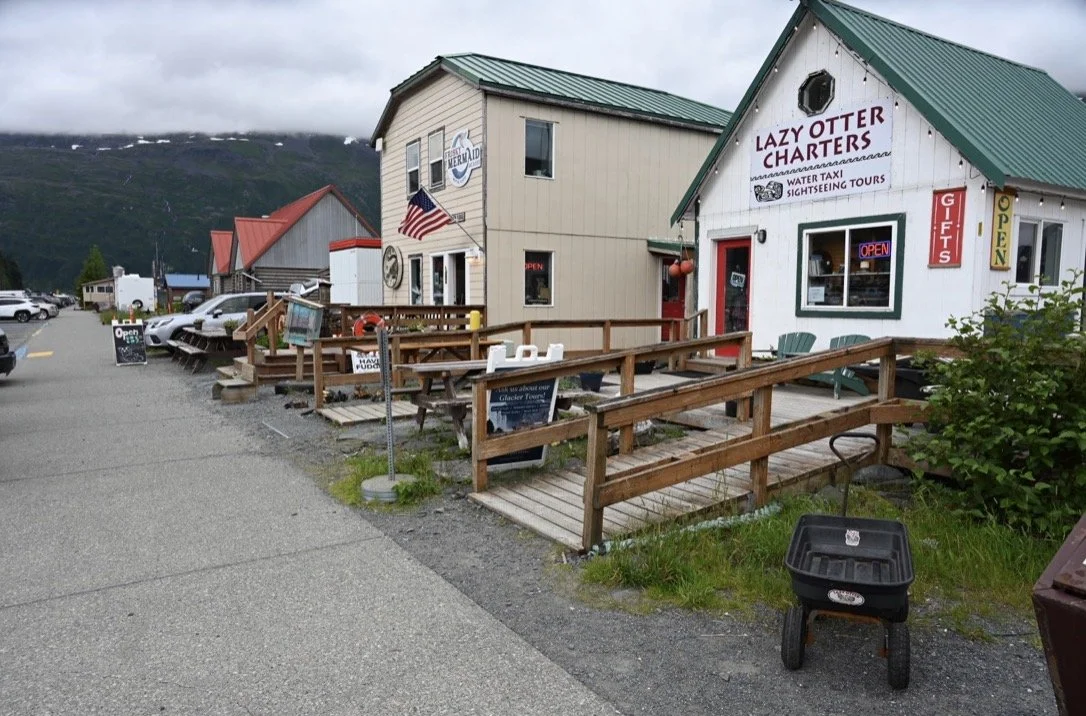
Lazy Otter Charters and Phillips Alaska Cruises, on either side of the Frisky Mermaid, are also on leases now subject to competitive bidding. (Photo by Soren Wuerth)
Bender, who's been president of the local 40-member Whittier Chamber of Commerce for two decades, is concerned her businesses will face competition when their 30-year-old leases expire Sept. 1.
"A lot of people think [our businesses] are big corporations. You can clearly see it's just Kelly and I," Mike Bender told council members at the August meeting. "We've committed over 30 years of our lives to do this. I feel like we're almost vilified and demonized for doing that and the only reason we ended up in this situation is because our lease didn't turn over."
"A Quagmire of an Issue"
City officials have tried to accommodate the "incumbent" businesses, according to a summary that prefaced an ordinance proposed Aug. 4. The measure would give businesses a 14-day window to apply for new leases and enter into "direct negotiations" with the city.
"... [The] City Council wanted to explore other options that would allow incumbent leaseholders, many of which had built improvements on the leasehold property and had been operating businesses for decades, an opportunity to directly negotiate with the City for a new lease," the measure said.
City manager Jackie Wilde did not respond to calls and emails from Turnagain News prior to publication of this story. In Council meetings, Wilde reiterated that waterfront property needs to be allocated for it's "highest and best use".
Though lease terms are different for each shop, the land still belongs to the city, and city lands are "there to serve the community," said Whittier Mayor Victor Shen, who also sits as a voting member on the City Council.
He said some of the properties have 99-year leases—referred to as "forever leases" in council meetings"— and compared their duration to the UK's lease of Hong Kong, also 99 years.
Shen's father, Chou Shen, held a lease in the "harbor triangle" of shops and sublet to Fees Custom Seafoods, a fish processing store. Yet, Chou Shen, who also owns the Anchor Inn in town, was denied an extension to renew his lease by the City Council in a 4-1 vote in April.
The public vote followed discussion held in an earlier executive session in which city manager Wilde recommended the Council deny Chou Shen an extension on his lease. Victor Shen voted with the majority. The Council granted three other businesses, including the Benders', a six-month extension on their lease agreements.
"You'll have to talk with him," Victor Shen said when asked about his father's rejected lease. Chou Shen could not be reached for comment.
"The community wants all leased property clean and functioning," Shen said, speaking generally about local businesses. "We want whoever's down there to be successful."
"By not keeping things shipshape, it hurts everybody. We have to have either enforcement or policies to hold them accountable, and standards," Shen said,
"If there is a bad actor, there needs to be a mechanism in place to enforce or reposses leases," he said. "It's a quagmire of an issue."
New development and more revenue
More land, about 85 acres, is set to become available to the city. The state legislature passed a bill this summer allowing Whittier to choose and buy additional property from Alaska Railroad.
To raise additional revenue, the City Council is considering a $5 ground-based passenger fee expected to generate $1.3 million for local coffers.
Meanwhile, the city is extending a road to Shotgun Cove farther up Passage Canal. It received $4.1 million to design a replacement for Delong Dock that juts out into Passage Canal at the south end of town.
The changes add new pressures on local infrastructure and the city's budget, with just over $2 million in its general fund. Shen said the city gets about as much from its leases along the harbor as it pays out to collect garbage.
The strain of supply and demand on the town comes as the city faces the challenge of balancing stability for longtime business owners against its obligation to manage increasingly valuable public land fairly and competitively.
Whittier's goal to increase tourism and freight—stated on its "Whittier Moves" website—will require improvements and investments in local infrastructure.
The city is considering a land allocation plan, which, along with a transportation and safety plan, is still underway, and only further complicates leasing.
"Showing Compassion"
If the city forces them to compete for a lease, the Benders fear they will face the interests of large companies that can offer a higher bid for their waterfront lots.
"It's really scary—legally, financially—it's terrifying," Kelly Bender said. "I mean, because, well, on one hand, you think, who's going to come in and want to do business in a town that can just pull the lease out from under you? Or is someone only going to get a five or ten year lease? Who with any kind of capital wants to do that?"
A lawyer for the city, Holly Wells, said during the Aug. 4 meeting the Council could create criteria for businesses that have to compete for bids.
"If you are worried, for example, that you have incumbent leaseholders that feel like they will not be valued, you can expressly draft criteria in the resolution that emphasizes the importance of that value," Wells said.

Kelly Bender stands in front of her waterfront cafe and gift store Frisky Mermaid. She worries that a missed lease notice could cost her the business. (Photo by Soren Wuerth)
Shen, who voted against the Aug. 4 measure to help incumbent businesses, said the city is "not trying to be mean, but is showing compassion" to businesses by keeping them "accountable" and "maintaining their fitness to compete and stand up to larger corporations."
Shen said the city's goal is a "socially diverse business community." He rejected the assumption that the city would simply award a lease to the highest bidder and said the city also needs rules to prevent bias.
"We need to follow policies and procedures and have to be able to defend these [awards]," he said. "A corporation could come in with malice and say your playing favorites there. It's a good old boys club. It could be construed that way."
"The battle now is to keep the community educated and aware and make sure we exercise these [policies] and don't implode," Shen said.
Whittier's next public meeting, scheduled for Aug. 19, will again take up leases. The Council will hear public comment on the Aug. 4 ordinance the Council voted down.
It will also take up a resolution to "declare certain city property interests available for lease" potentially clearing the way for the city to offer new leases without competitive bidding.
Kelly Bender said she is not optimistic the Council will decide in favor of her leases yet hopes changes are made to the three-year-old ordinance that sparked their troubles.