Water Utility Anticipates Upgrades for Aging Girdwood Plant
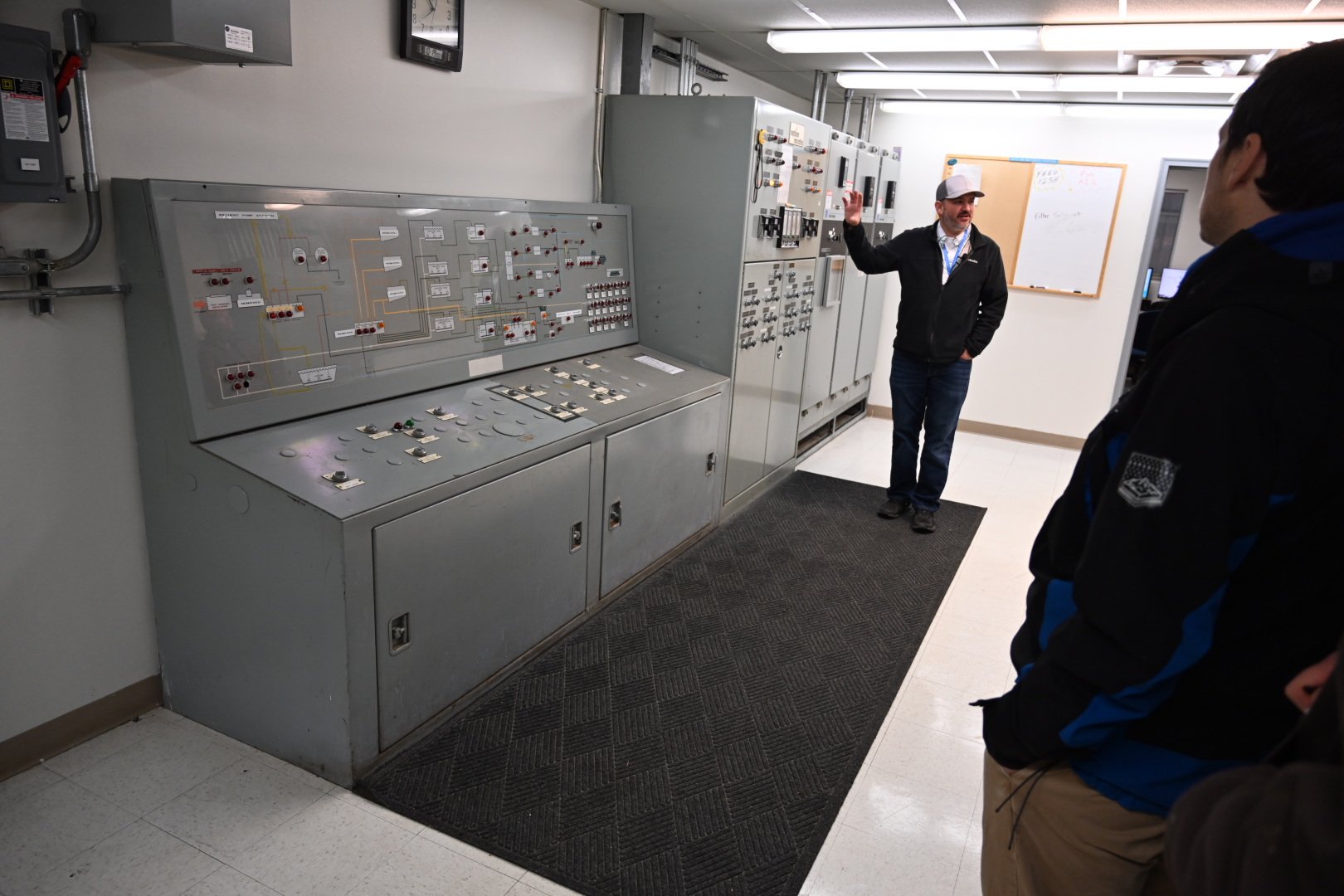
Girdwood Wastewater Treatment Plant Manager Mario Croce guided a tour through the facility for eight residents Monday. (Photo by Soren Wuerth)
By Soren Wuerth
TNews Editor
A master plan is underway for Girdwood's 50-year-old wastewater treatment facility and improvements could run as much as $100 million, said the facility's plant manager during a tour Monday.
The plant is "reaching the end of its useful life", according to an Anchorage Water and Wastewater Utility budget document. Its clutch of buildings at the end of Ruane Road digest around 450,000 gallons of sewage a day, but that amount can almost double at certain times.
And though the system can accommodate millions of gallons in a day, the flow over the course of a month comes close to meeting the plant's capacity.
Seasonal increases, like heavy rain and break up, and human-caused events, like Slush Cup, Christmas and the Super Bowl, push the intake of wastewater to around 800,000 gallons per day. The plant can handle up to 2.5 million gallons in a day, though its month-long treatment capacity caps at 600,000 gallons per day.
New commercial and residential developments, like the controversial "Holtan Hills" subdivision, will invariably add more demand on the community's water infrastructure.
Questions surrounding local water treatment were raised in August on social media by Amanda Tuttle, a member of the Girdwood Board of Supervisors, who reported the plant had violated Environmental Protection Act standards in "the last 12 out of 12 quarters".
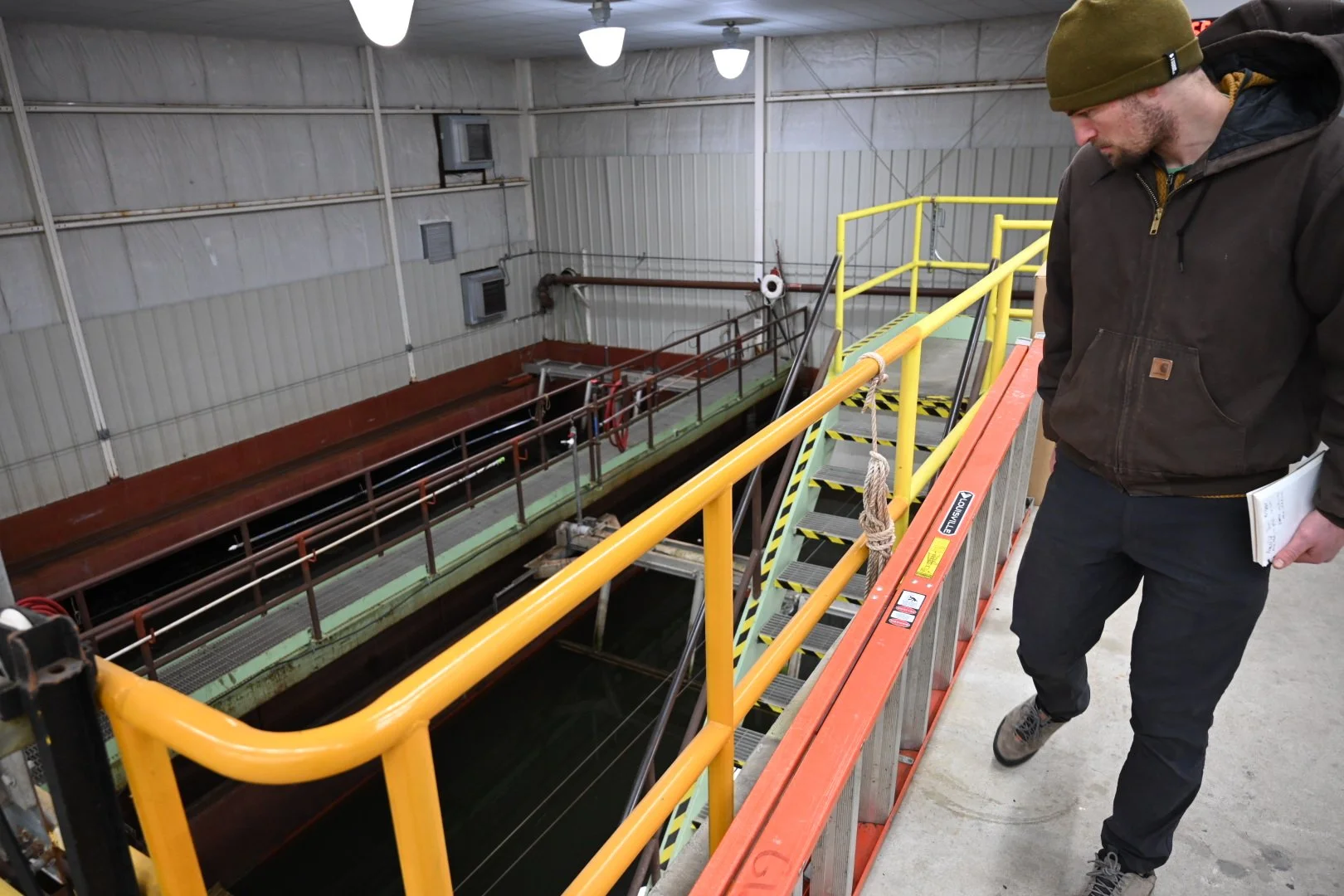
GBOS member Nick Crews looks into a pit where mocha brown wastewater churns through the treatment facility. (Photo by Soren Wuerth)
Last month AWWU spokespersons gave a presentation at a GBOS meeting to respond to those concerns and offered to schedule a tour of the facility.
At the GBOS meeting, plant manager Mario Croce explained that a paperwork error put the facility on the EPA's radar and the issue, involving the amount of bacteria found in the plant's effluent, has been resolved.
He said there's been "extensive sampling" in Glacier Creek to determine levels of copper, PH, and organic carbon.
"Because Glacier Creek is salmon bearing they are not allotted a mixing zone anymore," Croce said at the GBOS meeting. "Water quality standards are hardness-based standards to ensure they're not discharging toxins."
Though there has been more development in Girdwood, Croce said many communities have taken water conservation measures such as low-flow shower heads and toilets to reduce the volume of water entering the system.
The utility nevertheless faces the inevitability of repairing an aging infrastructure.
Wastewater flows into the plant through a collection of sewer mains and manholes. Groundwater has been infiltrating deteriorating infrastructure and a $2.5 million project to repair or replace just over 100 manholes in the valley will get underway next spring.
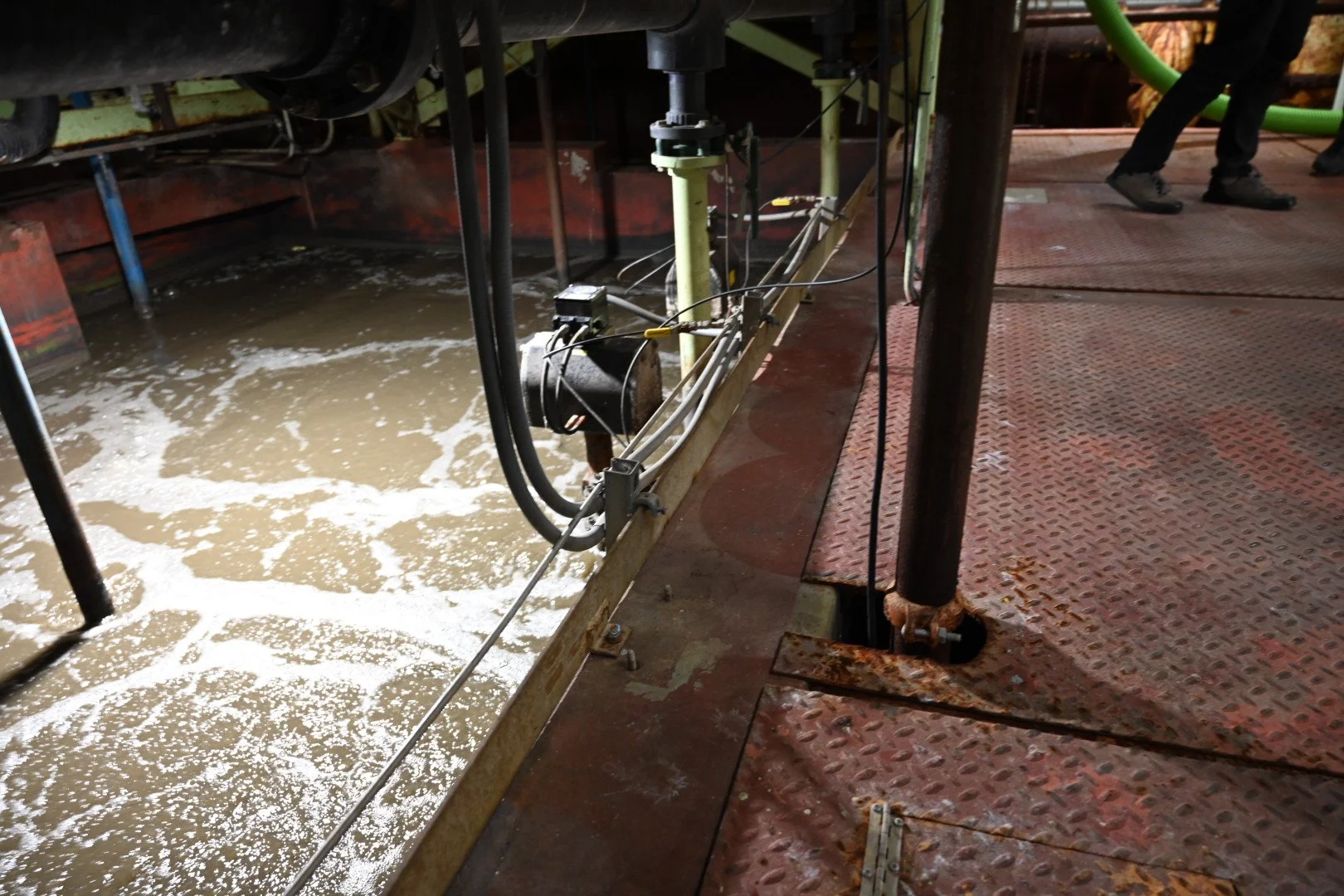
Wastewater bubbles, a sign it is breaking down organics, in the AWWU plant. (Photo by Soren Wuerth)
The Tour
Surrounded by a fence, the plant lies between Girdwood's transfer center and Glacier Creek. Its teal buildings are familiar to those walking the trail or dumping garbage, but the facility is infrequently visited.
On Monday, the plant opened its gate for a tour by members of Girdwood Board of Supervisors and a few curious residents.
"I wasn't even sure where to go," a GBOS member said before a safety briefing. Participants were asked to wash their hands and given earphones to listen to Croce over the clang and hum of machinery and whooshing of water.
Eleven people, including three AWWU staff, gathered in rain gear before walking through the treatment facility, as Croce described the functions of each of a half-dozen operations in alphabetized buildings:
Pipes, manholes and sewer mains throughout the valley send muddy-tan water into the treatment facility, where sludge is removed, the water is treated, and the treated effluent sent into Glacier Creek.
The plant employs six people, including four operators, one of whom lives locally. There have been upgrades over the years, one in 1996 another in 2012, to "stay up with demand", Croce said.
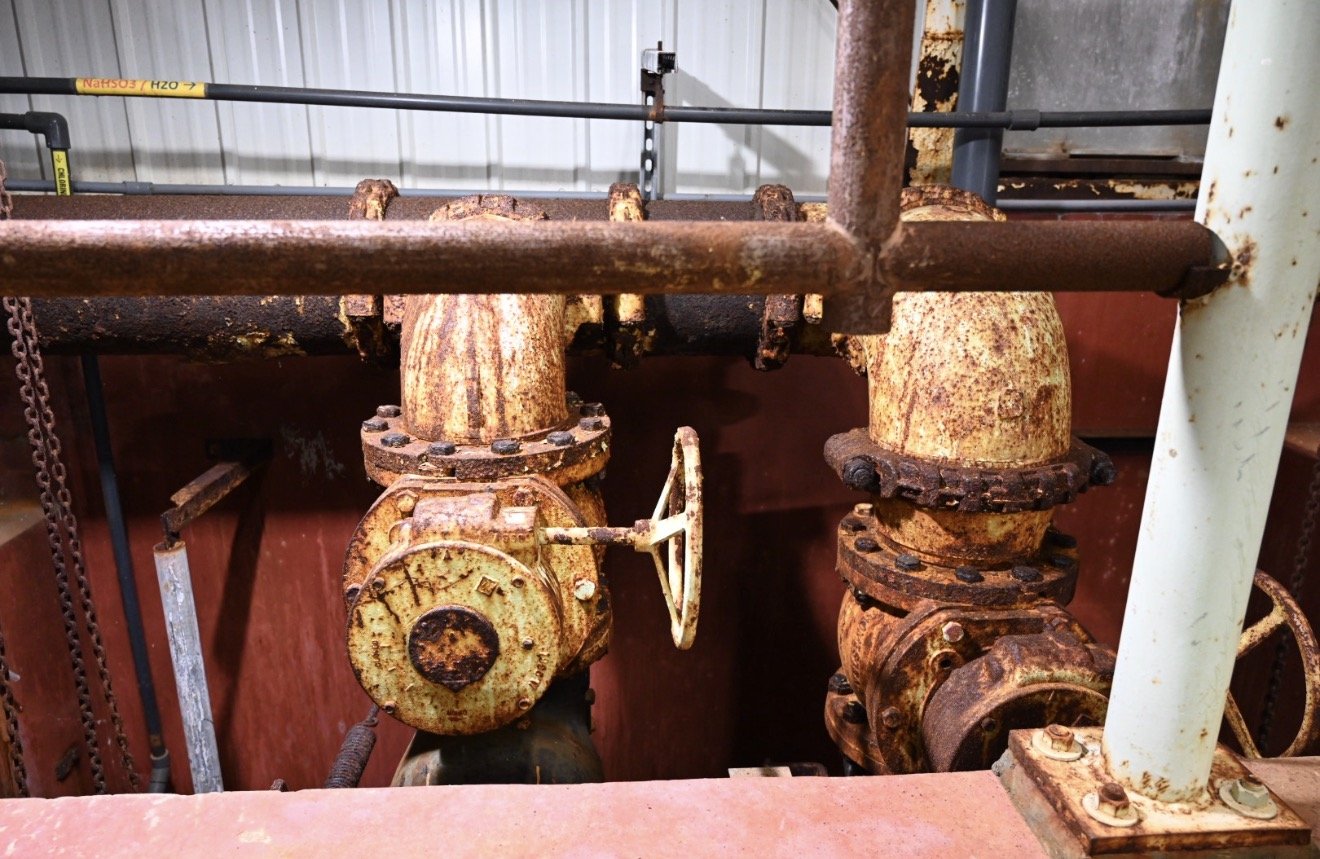
Rusting pipe fixtures show signs of rust and corrosion in the aging facility. (Photo by Soren Wuerth)
"[Wastewater] is not corrosive, but aggressive and we have pumps that wear out over time," he said.
The plant has to maintain a flow rate of water through its system at two to five feet per second, he said, "not too fast or too slow" to keep solids from settling while maintaining velocity.
The plant is "an activated sludge plant so we have big air blowers that blow air through a mass of what we call activated sludge so it's microorganisms and waste water and we mix that together to get the treatment," Croce said during the September GBOS meeting.
Sludge is sent to Anchorage once or twice a week for incineration. In the plant's operation, gasses are monitored, chlorine is added, then "removed" using sodium chloride, PH is adjusted, and the final, cleaner water discharged to mix with water from Glacier Creek.
Typically, Croce said, 95-98 percent of organic waste is removed in the process. The facility has won performance awards, silver or gold, almost every year the past decade, Sandy Barker AWWU's outreach coordinator said.
Toward the end of the tour, Tuttle, who has a background in environmental regulation and who lives downstream from the plant, said she had more specific questions and asked the AWWU officials if she could examine sampling results from testing, adding that she had to write a Freedom of Information Act request to get a facility report.
"I realize you're just right here, but I really care about that mixing zone and I care about our population downstream," Tuttle said.
AWWU's Assistant General Manager Allison Lang offered her card and said most of the information is in the public record, but she would prefer requests sent in writing.
Asked what they wish people wouldn't throw in their toilets, Croce and Baker said, almost in unison, "wipes".
"Just because it flushes, does not mean it breaks down in the system," Baker said, adding that tossing dental floss and hair in the toilet that end up "wrapping around nuts and bolts" is not recommended.
"We stick to the Three Ps: pee, poo and toilet paper," she said.
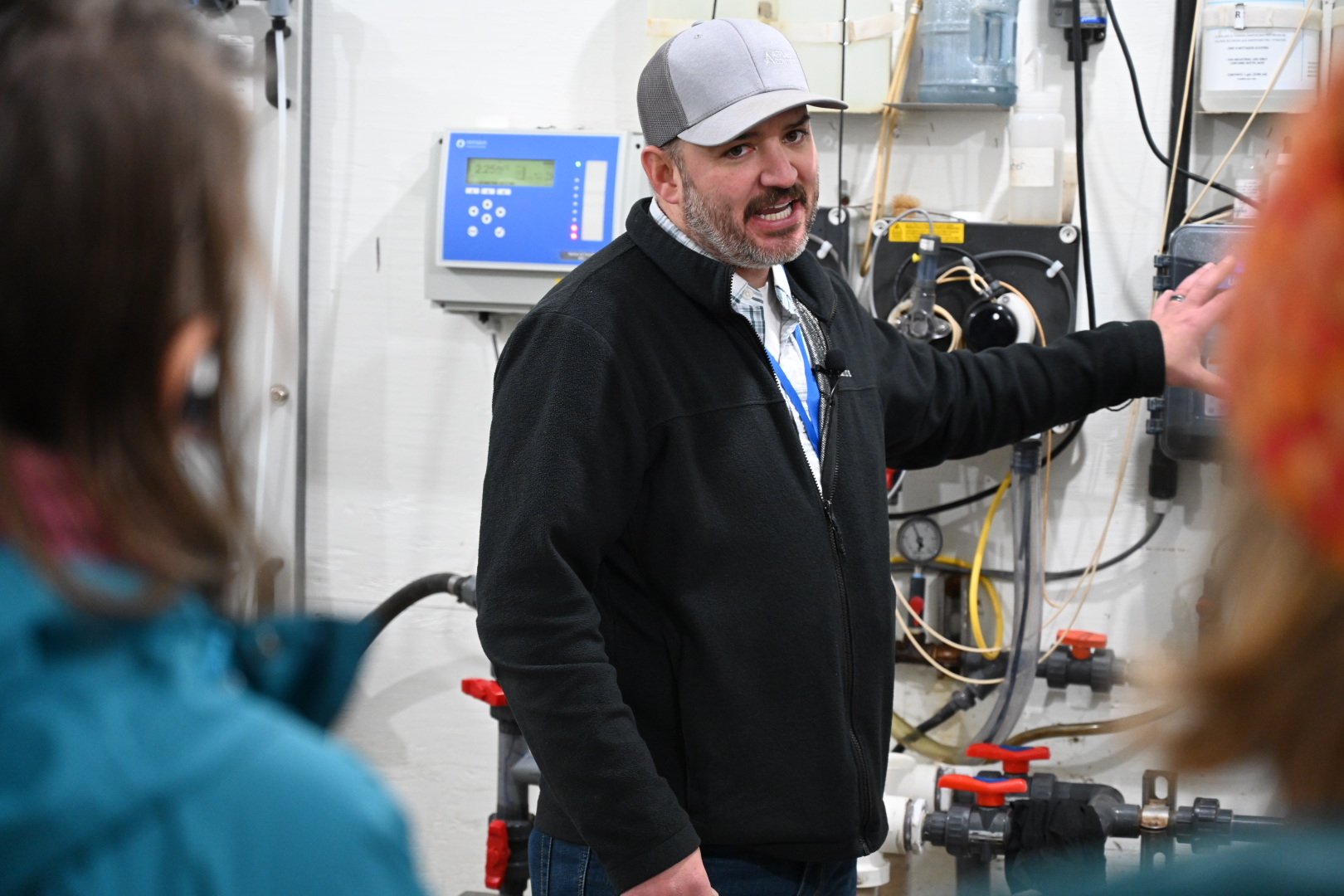
Girdwood Wastewater Treatment Plant Manager Mario Croce guided a tour through the facility for eight residents Monday. (Photo by Soren Wuerth)